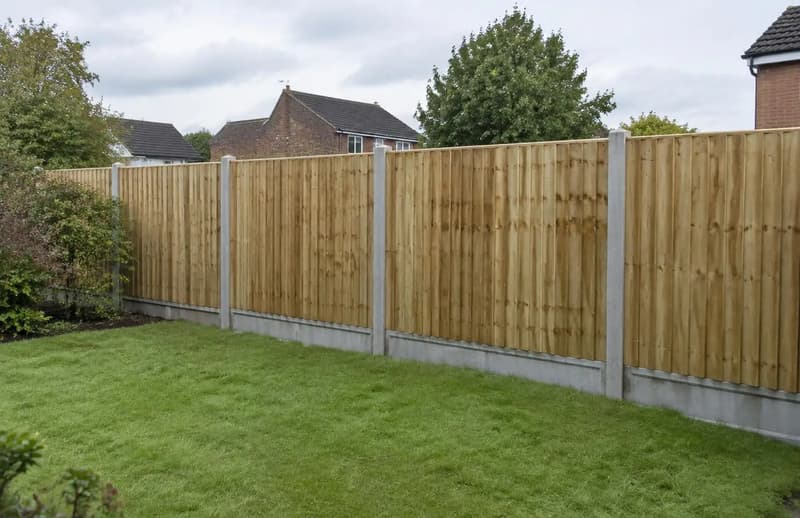
Garden Fencing in Winchester
Garden fencing in Winchester sits within a cathedral city on the River Itchen at the western end of the South Downs National Park. Discuss appearance alongside support and levels. AJ Adams Landscaping offers panel and close board fencing, concrete or timber posts and gravel boards from Southampton within about 20 miles. Ashley Adams provides a free site quotation to assess your boundary.
Free site quotationHeritage surroundings and the National Park edge
The Cathedral, Cheyney Court, the Buttercross, the Great Hall and City Mill are listed landmarks that help define Winchester’s historic setting. A garden fence is not automatically beside a listed building simply because it is in the city. Where heritage restrictions affect the property, obtain the relevant advice before changing the boundary, and discuss sympathetic timber styles without assuming one design is required everywhere.
St Barnabas, St Bartholomew, St Luke, St Michael and St Paul identify city wards; The Worthys, Badger Farm and Oliver’s Battery provide further local orientation. At the National Park edge or nearer the centre, look at the actual house and retained boundaries before choosing panels. A ward name does not settle ownership or access.
Chalk, clay and the choice of post support
Winchester’s ground includes chalk with small areas of clay and loam, plus fuller’s earth. Post holes may encounter chalk rather than easy-to-dig topsoil, but that does not establish the material under every boundary. Concrete settings or any proposed spike arrangement need to suit the ground encountered and the fence being supported. Choosing the visible post first should not replace checking how it will be held below ground.
Assess individual positions, including old footings and any ground that has been disturbed. The lawn surface alone cannot decide the support arrangement. Ask Ashley how the proposed posts suit the assessed conditions and the retained sections. Changes in ground along a run can matter without turning the whole city into an assumed hillside garden or assigning an identical excavation to every hole.
Longer runs and any changes in level
Across City of Winchester district, 36.2% of homes are detached, 25.8% semi-detached and 20.1% terraced. Detached housing makes longer boundaries relevant to the survey, but these are district figures, not measurements of your garden. Walk the full fence line and record changes in height, damaged supports and the stretches that can remain. A longer run need not have one uniform problem or require every bay to be replaced.
If your own garden changes level, stepped panels are one possible arrangement to discuss. Decide how the lower edge will meet lawn, paths and borders before selecting the finished height. A fence must not be used as a retaining structure for higher soil. Keep retaining requirements separate from fence style, and coordinate any garden levelling so the new boundary is not fitted against a temporary ground surface.
Choosing a finish beside an older property
Panel and close board styles have different rhythms along a boundary. Posts and gravel boards are part of that view too. Consider how a continuous line will sit beside brick, stone or an established planted border without assuming that an older home requires a particular material.
A replacement can keep the garden feeling coherent without copying every detail of the previous fence. Bring a few preferences to the visit, but remain open to adjustments where the slope or existing supports make a proposed layout awkward. Appearance is best considered alongside how the fence will actually be built.
Keeping timber clear of the soil
Gravel boards sit beneath the fence and help keep the timber away from direct soil contact. On a changing level, the bottom of the run deserves as much thought as the top. A board should not simply hide an unresolved difference between the garden levels on either side.
Concrete posts and timber posts also have different practical and visual qualities. Where only a few bays are being replaced, check whether the proposed materials suit the retained sections. The post comparison guide explains the choices without treating one material as the answer to every boundary.
Fencing alongside a patio or wider garden work
If a new patio is planned beside the boundary, agree the sequence before either part begins. Access for excavation, movement of materials and the finished paving level can all affect the fence line. This is a reason to coordinate the work, not a reason to replace fencing that remains sound.
Partial repairs can also fit into a wider plan. A few damaged panels might be addressed now while another part of the garden is changed later. Explain the whole proposal to Ashley so the immediate work does not obstruct the next stage.
Request a free quotation for your boundary
Call 07904 481178 or send the contact form to arrange the discussion with Ashley. Include the location, whether the fence is on a slope and what appears damaged. A site assessment can then cover the layout, post positions, access and removal of unwanted fencing.
Agree waste removal as part of the scope and settle any uncertainty about ownership before replacement. If the property has planning restrictions, check them with the council before committing to a changed boundary.
Common questions
Questions about garden fencing in winchester
How can a timber fence suit Winchester’s heritage setting?
Compare the proposed panels, posts and retained boundaries with the actual property. A sympathetic style is worth discussing, but listed landmarks elsewhere in the city do not prescribe a fence for every home.
Should a post spike be chosen before checking Winchester chalk?
No. Assess the material at each proposed hole and the support required by the fence. Chalk, small clay or loam areas and existing footings can call for different arrangements; appearance alone does not decide the fixing.
What should neighbours agree before a longer Winchester boundary is replaced?
Confirm ownership, the line to be followed and any access required from the adjoining garden. District housing figures do not establish those rights, and a free quotation is not permission to remove a neighbour’s fence.