Why gravel suits busy households
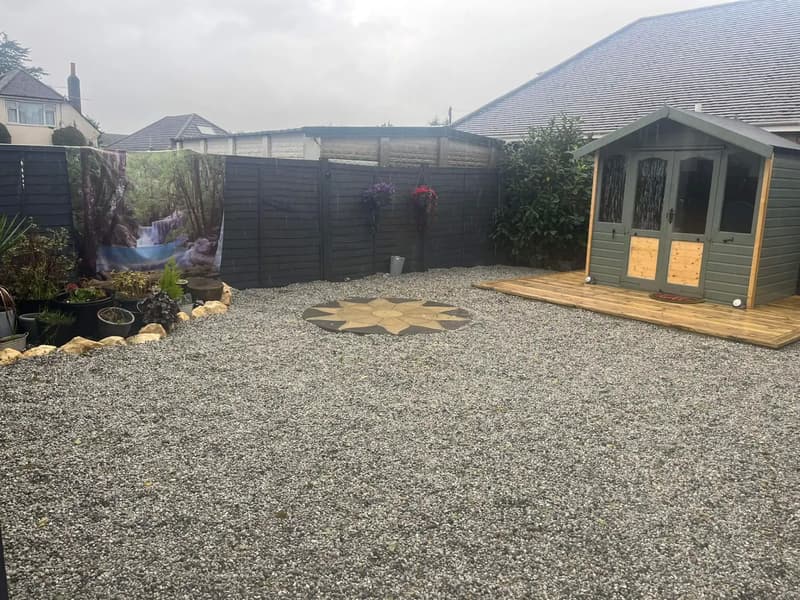
Gravel asks very little once it is down. There is no mowing, it drains freely after rain, and it copes with a dog, a bike or a wheelie bin in a way a lawn never will. It is also forgiving of odd shapes: corners, curves and awkward strips that would be fiddly to turf or slab can be filled neatly with stone.
One of the projects on our homepage shows this well. An overgrown lawn was cleared and prepared, then finished in gravel, turning a garden that needed constant work into a practical space.
Planting pockets in gravel
Gravel does not have to mean bare. Cutting crosses in the membrane and planting through it lets you set grasses, lavender, low shrubs or herbs directly into the stone, so the area reads as a garden rather than a car park. Group plants in drifts rather than dotting them evenly, and leave enough clear stone between groups to walk and rake.
Plants that enjoy free drainage and sun do best here. Anything that needs rich, damp soil will struggle under a stone mulch.
Stepping-stone and slab paths through gravel
A line of slabs or stepping stones set into gravel gives a firm route across the area and stops loose stones being kicked about. Each stone should sit on its own firm bed so it does not rock, with its surface just proud of the gravel. Spacing them to a comfortable stride makes the path feel natural.
For a longer or more used route, a continuous path in slab or stone with gravel either side works better. Our pathway materials guide compares the options.
Gravel and decorative stone
- Ground cleared and levelled first
- Weed membrane laid and lapped properly
- Firm edging to hold the stone in place
Edging that keeps stones in place
Edging is what separates a tidy gravel garden from one that slowly spreads across the lawn and patio. A firm edge holds the stone at a set depth and gives a clean line between surfaces. Timber, steel, sleepers, setts or a slab border can all do the job; the right one depends on the look of the rest of the garden.
Where gravel meets a lawn, set the edge slightly above the grass so mower wheels run along it and stones are not thrown onto the turf.
Membrane and base
A weed membrane laid over cleared, prepared ground keeps soil and stone apart and cuts down the weeds that would otherwise come up from below. The ground needs clearing of roots and debris first and raking reasonably level, because any hollows will show as thin patches of stone later. On areas that take foot traffic, a firmer compacted layer under the membrane stops the gravel sinking into soft ground.
Choosing gravel size and colour
Stone size changes how gravel behaves. Very small, rounded pea shingle moves underfoot and travels on shoes. Angular chippings lock together and give a firmer surface to walk on. Larger pebbles and cobbles are decorative but uncomfortable to cross. Slate and other decorative stone add colour and texture to borders and features.
Colour is worth seeing in the garden, wet and dry. Pale stone brightens a shady space; darker stone suits a contemporary planting scheme. Matching the tone of your patio or house brick usually gives the calmest result.
Gravel with sleepers or decking
Gravel works well alongside other materials. Sleepers laid flat make crisp steps or borders, and stood on end they can hold back a change in level, which our sleeper retaining wall guide covers. A deck surrounded by a gravel apron is easy to keep clean around, and gravel under a raised deck is tidier than bare soil.
If the garden needs clearing before any of this can start, that is a separate stage and it is worth booking first.
Upkeep: weeds and raking
Even with a membrane, seeds blow in and germinate in the top layer of stone. Pulling them while small takes minutes. A rake across the surface now and then evens out the stone where it has been pushed into ridges, and a top-up every few years keeps the depth right. Leaves are easiest to clear with a leaf blower or a soft rake before they break down into the stone.