Southampton and within 20 miles
Front Garden Landscaping in Southampton
Front garden landscaping should make the approach to your home work better as well as look considered. A clear path, usable bin route and contained gravel can matter more than filling every corner with a new feature. Plan the entrance around daily movement before deciding how much ground to pave or retain.
Planned for your property
A sound foundation and a finish that belongs
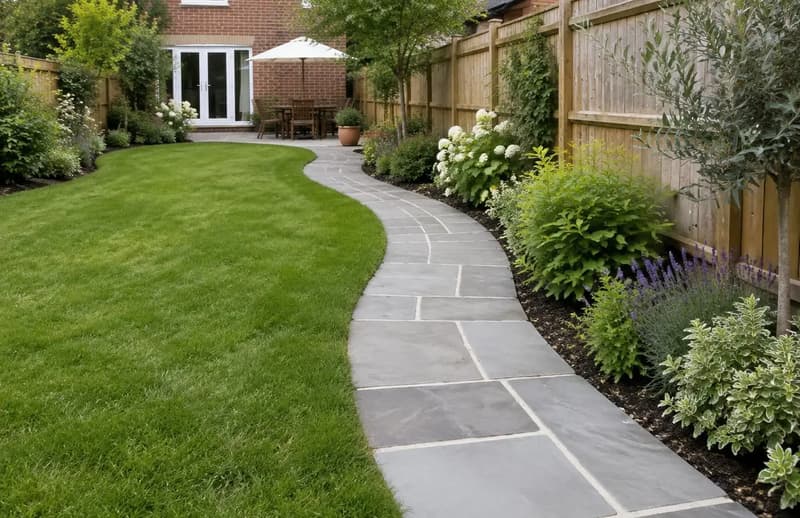
A front garden makeover involves competing uses in a small space. Visitors need a legible route, bins need room to turn and any parking must not crowd the door. Ashley carries out the agreed landscaping himself, from quotation through to the finish. The image is existing garden work for context, not a claim about a new named front-garden job.
Ashley stays closely involved from the first conversation to the final tidy-up, so you always know who is responsible for your project.
What you can expect
- Entrance and walking routes planned around daily use
- Path, stone and retained space considered together
- Parking proposals separated from ordinary garden changes
Make the door easy to reach
A path should lead naturally from the entrance to the pavement or parking area without an awkward detour. Check door swings, porch steps and space for someone carrying shopping. A decorative strip can look generous in a drawing yet become too narrow when bins or planting overhang it. Measure the clear route rather than only its outer edges.
Changes in material can mark where visitors should walk. A firm slab path gives a different experience from loose chippings, especially for wheeled bins or pushchairs. Our pathways page covers slab, stone and gravel routes; think about that practical choice before using one material across the entire frontage.
Low maintenance without a lifeless frontage
Low maintenance does not mean no attention. Gravel still gathers leaves and can migrate onto paths, while paving joints need occasional checks. Keep edges accessible and avoid little pockets that trap litter but cannot be reached with a broom. Retaining some permeable or planted ground can also soften the transition between the house and street.
Decorative stone can define an area that does not need to carry regular foot traffic. Slate and chippings have different textures, so consider how the chosen surface sits beside a walking route and where the loose material will be contained. The gravel and decorative stone page explains this part of a makeover separately from driveway construction.
When a front garden becomes parking
Turning garden space into parking is a different decision from refreshing a path. Vehicle loads, surface water and access from the road need assessment, and a new or altered vehicle crossing may require council approval. Check the driveway planning guide and the local authority requirements before assuming the boundary can simply be opened.
AJ driveway surfaces are gravel, decorative stone and slab only. The driveway hub covers their preparation and use. Keep a pedestrian route in the proposal so a parked car does not force visitors into the road or leave bins trapped behind it. Where parking is impractical, a clearer garden layout can still improve everyday access.
Work around what should stay
Existing trees, services, covers and boundary features can shape the design. Raising soil or piling stone around a tree is not a substitute for considering its roots. Ask what is known about buried cables or pipes before excavation, and keep inspection points reachable once the makeover is finished.
The wider garden redesign discussion helps decide whether the front is a standalone job or part of changes elsewhere. Agree connections to side paths and the rear garden so you do not create a newly finished area that must be disturbed for the next phase. The result should serve ordinary routines, not just a photograph from the pavement.
Discuss this as part of the wider garden
Bring your entrance priorities into a garden redesign enquiry. Photographs of the existing path and any access pinch points help explain what you want the frontage to do differently.
Pricing
What shapes the quotation?
The starting surface, excavation, edging, path layout, material choices and waste access determine the scope. A narrow frontage with awkward cuts may involve more detailing than a larger simple plot. No separate front-garden price is given here. Identify the priorities at the visit so the quotation covers the intended makeover rather than an assortment of unrelated finishes.
Timescales
Decisions before the work starts
Watch the routes
Notice where people, bins and deliveries actually move.
Set priorities
Decide what needs to stay open and what space can change.
Choose surfaces
Match walking areas and decorative zones to their purpose.
Check constraints
Resolve drainage, boundaries and any parking permissions first.
Guides
Helpful reading before you commit
Common questions
Front Garden Landscaping: your questions answered
Can I turn my front garden into parking?
Possibly, but vehicle access, highway approvals and surface-water requirements need checking. Use the driveway service page and driveway planning guide before deciding. AJ lays gravel, decorative stone and slab drives only.
How do I make a front garden low maintenance?
Keep walking routes simple, contain loose stone, avoid unreachable corners and choose details that are easy to sweep and inspect. Gravel and paving still need some upkeep.
Should the path and driveway use the same surface?
Not necessarily. A firm pedestrian route can be useful beside loose stone parking, provided edges and levels make the transition practical.
Plan ahead
Book winter groundwork so your garden is ready for spring
Autumn and winter are useful times to tackle digouts, levelling, fencing and foundations. Get the preparation done before the days get longer.
Areas covered
Local landscaping within 20 miles
Ready to improve your garden?
Arrange a free site quotation with Ashley.