Southampton and within 20 miles
Patio Drainage and Waterlogged Garden Options
Patio drainage starts with identifying where water comes from and where it can safely go. A channel beside paving is not a complete solution without a suitable outlet. Garden drainage is an enquiry scope to confirm at the site visit, with no claim of past drainage projects on this page.
Planned for your property
A sound foundation and a finish that belongs
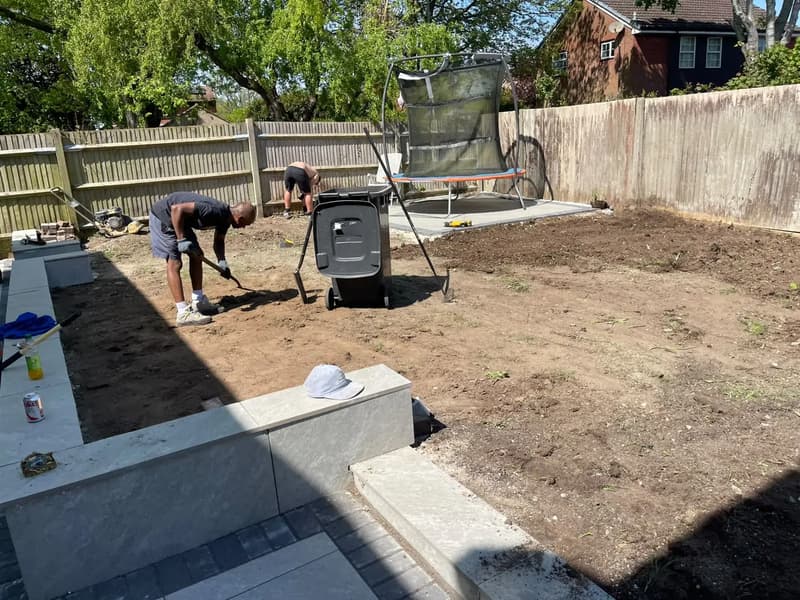
Water against the house, a muddy lawn and a puddle on paving may have different causes. Surface levels, compacted soil, blocked existing drainage and incoming runoff should be considered separately. The preparation photo is general context, not evidence of an AJ drainage installation. Where investigation or specialist design is needed, establish that before agreeing construction.
Ashley stays closely involved from the first conversation to the final tidy-up, so you always know who is responsible for your project.
What you can expect
- Runoff traced before a drainage feature is proposed
- Building edges and existing outlets considered
- Scope and any specialist requirements confirmed at the visit
Water pooling against the house
Begin with the paving level and the direction of its fall. If slabs slope towards the building or a settled strip forms a trough, a drainage channel alone may leave the underlying level problem untouched. House walls, thresholds, damp-proof details and air vents all need to remain protected when outdoor levels are changed.
A blocked channel or gully may need maintenance rather than a new system. Do not lift heavy covers or enter drainage spaces to investigate. Photograph the visible water route safely and explain whether the problem appeared after alterations. Persistent damp indoors should also be assessed by an appropriate building specialist.
Channels collect; outlets dispose
A channel drain gathers surface water along a line, commonly at the edge of hard paving. It needs a route onwards. A soakaway is an underground infiltration arrangement intended to release water into suitable ground. They perform different tasks and are not interchangeable products to pick from a picture.
Soakaway suitability depends on ground conditions, available space and nearby structures. Heavy clay, high groundwater or a small confined plot may limit infiltration. Connections to existing drainage require checks rather than an assumption that the nearest pipe is available. No discharge into a neighbour's land should be treated as a convenient solution.
Muddy garden solutions without guesswork
A lawn that turns muddy under frequent use can be compacted, shaded or poorly established, as well as wet. Replacing the surface without looking underneath may simply reproduce the issue. Map the wet area: does it follow a worn walking route, sit below neighbouring ground or remain damp even after the surrounding lawn dries?
The waterlogged lawn guide helps separate symptoms, while the patio pooling guide focuses on paving faults. This service enquiry page concerns assessing possible work once the cause is understood. Garden drainage should not be presented as a universal cure for every mossy patch, nor should a new lawn be promised to absorb water that has nowhere to go.
Planning changes as a whole
A patio, lawn and path share the same rainwater routes. Raising one surface can send runoff into another, so proposed changes need to be considered together. Explain future plans at the visit, especially if you expect to extend paving or alter the garden level later. A route that works today may be blocked by the next phase.
Keep drainage features accessible for cleaning and inspection. Leaves, silt and debris can reduce performance even where the original layout is suitable. Discuss maintenance responsibility and ask what happens in unusually heavy rainfall. A practical proposal acknowledges these limits instead of offering a blanket promise of a permanently dry garden.
Discuss this as part of the wider garden
Drainage discussions belong within the overall redesign so paths, lawns and hard surfaces do not work against one another. Use the patio hub to consider the paving layout as well as rainwater collection.
Pricing
What shapes the quotation?
No drainage rates are published here. The likely work depends on the cause, ground conditions, route length, excavation access and whether an acceptable destination for water can be established. An isolated low slab is not the same job as a saturated lawn. Any quotation needs to describe the intended system and its limits, including work outside the agreed scope.
Timescales
Decisions before the work starts
Observe rain
Record where puddles first form and how long they remain.
Check the route
Look at surface falls, existing drains and incoming runoff.
Assess an outlet
Establish whether water has a lawful, suitable destination.
Confirm the proposal
Agree what is feasible and any design or approval needed.
Guides
Helpful reading before you commit
Water pooling on your patio: why it happens and how to fix it
Read the water pooling on patio guide before settling the details of this project.
Read the guide SeasonalWhy your lawn stays waterlogged, and how to fix it
Read the waterlogged lawn fixes guide before settling the details of this project.
Read the guideCommon questions
Garden and Patio Drainage: your questions answered
How do you stop water pooling against the house?
First check paving falls, settled areas and existing drains. Depending on the cause, correcting levels or a collection channel with a suitable outlet may be considered. Protect the building details and seek specialist advice where damp or structural concerns exist.
What is the difference between a channel drain and a soakaway?
A channel collects surface runoff along an edge. A soakaway disperses water into suitable ground below the surface. A channel needs an onward route, while a soakaway requires a site-specific suitability assessment.
Will new turf fix a waterlogged garden?
Not by itself if the underlying ground remains saturated or runoff keeps entering the area. Diagnose the source and ground conditions before deciding on a new surface.
Plan ahead
Book winter groundwork so your garden is ready for spring
Autumn and winter are useful times to tackle digouts, levelling, fencing and foundations. Get the preparation done before the days get longer.
Areas covered
Local landscaping within 20 miles
Ready to improve your garden?
Arrange a free site quotation with Ashley.