Southampton and within 20 miles
Shed Bases and Concrete Bases in Southampton
A shed, summerhouse, hot tub or bin store is only as good as what it sits on. We dig out, lay and compact a sub-base, shutter the edges square and pour a concrete pad that stays level, so doors close properly and nothing rots from the ground up.
Planned for your property
A sound foundation and a finish that belongs
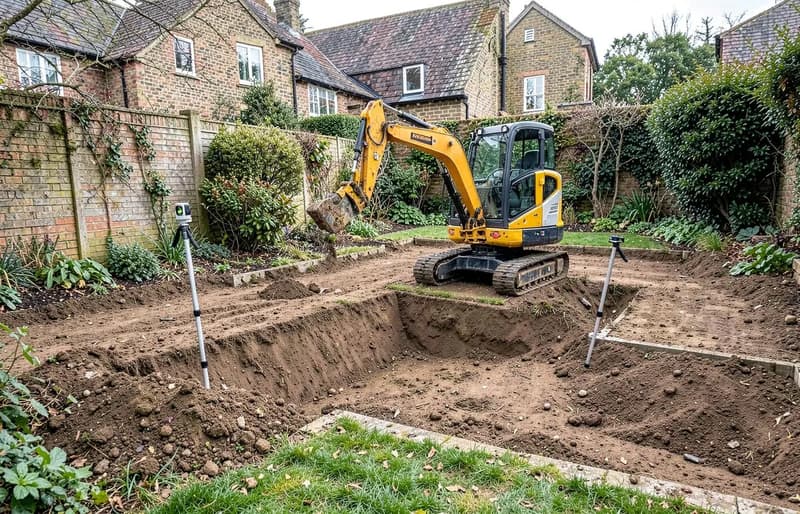
Concrete pads are on Ashley's list of regular work, alongside slabbing. Most of the effort happens before any concrete arrives: marking out to the size of the building, digging to firm ground, building and compacting the sub-base and setting the formwork to the right height and fall. The pour itself is the quickest part of the job.
Ashley stays closely involved from the first conversation to the final tidy-up, so you always know who is responsible for your project.
What you can expect
- Sized to the building with a working margin
- Dug to firm ground, not laid on topsoil
- Compacted sub-base under the concrete
- Shuttered square and finished level
Sizing a shed base properly
The base should be slightly larger than the footprint of the building so rainwater drips off the roof on to the concrete rather than soaking the bottom of the walls. Check the manufacturer's base size for your shed or summerhouse before we mark out, because some kits measure from the roof overhang and others from the floor frame. Leave space around the sides to reach the walls for treatment and maintenance.
Think about the door too. A small apron of concrete or slabs in front of the door stops a muddy patch forming where you step in and out.
What goes under a concrete pad
Concrete laid straight on to topsoil cracks and tilts as the soil moves. We strip the topsoil and dig down to firm ground, then lay and compact a hardcore sub-base in layers. On clay, which is common across Southampton and the surrounding towns, that firm layer stops seasonal shrinking and swelling showing through as cracks.
Larger pads and anything carrying a heavy load, such as a filled hot tub or a workshop with machinery, may need reinforcement mesh and a thicker slab. We work that out from the load rather than using one thickness for every job.
Concrete or slabs for a shed base?
Both work when the ground underneath is right. A concrete pad suits larger buildings, heavy loads and bases that need to be one solid piece. A slabbed base is quicker to lay, easier to lift later and can look neater if it is visible around the building. Our guide to slabbing for sheds and bases covers the slab option in detail.
- Concrete: one solid slab, best for heavier buildings and hot tubs
- Slabs: quicker, can be relaid later, tidy where the edges show
- Either: needs a dug and compacted sub-base to stay level
Curing and when you can build on it
Fresh concrete needs time to gain strength before it carries a building. We protect it from heavy rain and frost while it cures and give you a clear date for putting the shed or summerhouse on. Bases are a good job for autumn and winter as long as hard frost is avoided, so the building is ready to go up in spring.
A shed base that keeps the building level
A shed is only as good as what it stands on. A base that is out of level twists the frame, so doors stick and panels gap, and a base that sits in damp ground rots the floor from below. A concrete base for a shed is dug out, built on compacted stone, shuttered to size and poured level, so the building sits square and dry for its whole life.
Size matters here. The base is cast slightly larger than the shed so rain drips clear of the walls, and the finished height is set so the floor stays above the surrounding ground. These are small decisions on the day that decide whether the shed lasts.
Concrete base or wooden shed base?
A wooden or plastic grid base is lighter and quicker, and for a small, light shed on firm, level ground it can be enough. Concrete suits heavier buildings, summerhouses, workshops and hot tubs, anywhere the weight is high or the ground is soft, and anywhere you do not want to think about the base again. Slab bases sit between the two: quicker than concrete, firmer than timber, and easier to lift years later.
Ashley will tell you which your building needs on the visit. Where the ground is soft or sloping, the answer is almost always concrete, because everything else follows the ground down.
Bases for more than sheds
The same build carries summerhouses, garden offices, log stores, bin and bike stores and hot tubs. Hot tubs in particular need a base designed for the filled weight, which is far heavier than any shed. If the base is part of a wider project, the hard landscaping page explains how it fits with the paving and paths around it.
Pricing
What affects the price of a concrete base?
A concrete base is priced on its size and thickness, the depth of digout needed to reach firm ground, how much spoil has to be removed, whether the ground slopes and needs building up on one side, any reinforcement for heavier loads such as a hot tub, and access for the concrete. A garden that can only be reached by barrow takes longer than one where a mixer can pull up close. We look at all of that on the visit and give you a written quote.
Timescales
How long does a concrete shed base take?
Mark out and dig
Base set out to size and dug to firm ground, spoil removed.
Sub-base
Hardcore laid and compacted in layers to a firm, even bed.
Formwork
Timber shuttering set square, to height and to a slight fall.
Pour and cure
Concrete placed, levelled and left to cure before the building goes on.
Guides
Helpful reading before you commit
Slabbed bases for sheds, bin stores and garden buildings
A shed is only as good as what it sits on. How a slabbed base is sized, levelled and built to stay flat.
Read the guide ProcessWhat a garden digout involves
The unseen first stage of most hard landscaping. How deep, why it matters and what happens to all that soil.
Read the guide SeasonalBook winter groundwork so your garden is ready for spring
Which garden jobs are better done in the cold months, which should wait, and how to phase the work sensibly.
Read the guideCommon questions
Concrete Bases and Shed Bases: your questions answered
How big should a shed base be?
Slightly larger than the building footprint, so rain from the roof lands on the base rather than the walls. Check your shed's own base size before we mark out.
Can concrete go straight on soil?
It should not. Topsoil moves and holds water. We dig to firm ground and lay a compacted sub-base first so the pad stays level.
Is a concrete base better than slabs for a shed?
For heavier buildings and hot tubs, usually yes. For a standard shed, a well laid slabbed base is just as good and easier to lift later.
Can you lay a base on a sloping garden?
Yes. We dig into the high side and build up the low side with a compacted sub-base and formwork, so the finished pad is level.
How long before I can put my shed on the base?
It depends on the weather and the thickness of the pad. We give you a clear date once the concrete is poured.
How much does a concrete base or slab cost?
It depends on the size and thickness, the digout the ground needs, access for the concrete and whether old material has to come out first. Ashley prices each base after a site visit so the figure reflects your garden.
Do I need a wooden shed base or a concrete one?
For a small, light shed on firm, level ground, a timber or grid base can be enough. For heavier buildings, soft or sloping ground, or anything you want to forget about, concrete is the reliable choice.
How thick does a shed base need to be?
It depends on what stands on it. A garden shed needs far less than a hot tub or a garden office. The depth of digout and the base thickness are set to the load, which is decided on the visit.
Can a base go on a sloping garden?
Yes. The ground is levelled first, either dug into the slope or built up on compacted stone, so the finished base is level whatever the garden does around it.
Plan ahead
Book winter groundwork so your garden is ready for spring
Autumn and winter are useful times to tackle digouts, levelling, fencing and foundations. Get the preparation done before the days get longer.
Areas covered
Local landscaping within 20 miles
Ready to improve your garden?
Arrange a free site quotation with Ashley.