What a clearance quote covers
A clearance quote should say what is being removed, how far down the work goes, and what state the garden will be left in. Cutting back and taking away overgrowth is one level. Removing the roots as well, so the ground is ready for something new, is another. Lifting old surfaces and structures is another again. Being clear about the finish you want, whether that is bare ground ready for turf or simply a tidy garden, avoids surprises.
Volume and type of waste
The amount of material is the biggest single factor. A small garden of overgrown shrubs fills far less than a long plot that has been left for years. The type matters too. Soft green waste such as branches, brambles and grass is light and bulky. Soil, rubble, broken slabs and concrete are heavy, and heavy waste costs more to load and take away. A mix of both is common, especially where a garden has old paths or a shed base hidden under the growth.
Access and carrying distance
How the waste gets from the garden to the vehicle changes the time involved more than people expect. A wide side gate with a level path lets a machine or barrows work quickly. A terraced house with no side access may mean everything is carried through the house, which is slower and needs protecting floors. Steps, narrow alleys and long back gardens all add to the time, which is why access is one of the first things checked on a visit.
Garden clearance
- Overgrowth, brambles and tired lawn cut back and lifted
- Old sheds, fencing and broken paving taken down
- Green waste and rubble removed from site
Roots, stumps and old structures
Cutting a shrub to the ground is quick. Getting its root out so it does not grow back is not. Large roots and old stumps take digging, and sometimes a machine, to remove. Old sheds, rotten fences, raised beds and greenhouses need dismantling before they can go. Each of these is worth mentioning when you ask for a quote, so it is included rather than discovered halfway through.
Old paving and concrete
Lifting an old patio, path or concrete base turns a clearance into a digout. The slabs or concrete have to be broken out, and the bedding and sub-base below often come out too, which is a lot of heavy material. If you are planning new paving or turf in the same place, this is usually the right time to do it, because the ground is being opened up anyway. Our digout guide explains what that stage involves.
Clearing before a redesign
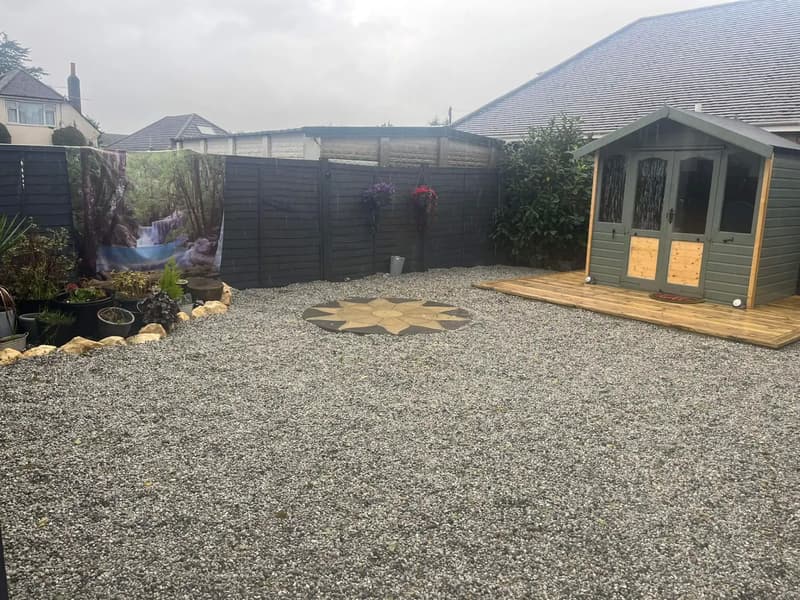
Many clearances are the first stage of something bigger. The overgrown lawn on our homepage was cleared and prepared before being finished in gravel, and a full garden redesign almost always starts by stripping back what is there. Planning the clearance and the new layout together means the ground is left at the right level and in the right condition for what comes next, and soil can sometimes be reused on site rather than taken away.
How Ashley quotes
Ashley visits the garden, looks at how much is there and what it is, checks access, levels and drainage, then writes up the job. That written description sets out what is being cleared, what is staying, and how the ground will be left, so you are comparing like with like if you ask for more than one quote. If you can, point out anything buried, such as old paving under grass, during the visit.