Southampton and within 20 miles
Gravel Gardens and Decorative Stone in Southampton
Shingling and decorative stoning turn a tired lawn or bare patch into a low upkeep space that drains well and looks tidy all year. The finish depends on what goes underneath: a cleared, levelled base, a proper membrane and edging that keeps the stone where you want it.
Planned for your property
A sound foundation and a finish that belongs
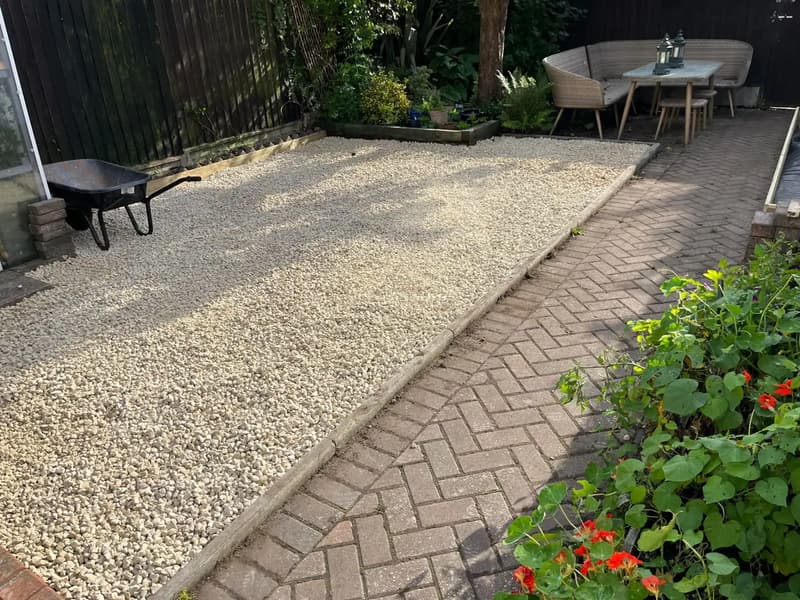
A gravel garden is one of the jobs we are asked about most, and the homepage project of an overgrown lawn cleared and turned into a gravel finish is a good example of the result. The stone is the last ten per cent of the work. The clearing, levelling and edging underneath decide whether it stays neat or ends up spread across the lawn.
Ashley stays closely involved from the first conversation to the final tidy-up, so you always know who is responsible for your project.
What you can expect
- Ground cleared and levelled first
- Weed membrane laid and lapped properly
- Firm edging to hold the stone in place
- Gravel, shingle, slate or chippings to suit
Gravel garden ideas that work in Hampshire gardens
Gravel suits the spaces where grass struggles: shaded side returns, the strip beside a driveway, small front gardens and the corners that never quite get mown. It also works as a calm base around planting, with pots or a few shrubs breaking it up, and as a softer alternative to a second patio. In the Chandlers Ford redesign shown on our homepage, a gravel area with a stone inlay finished the garden around the new patio.
Think about how the area will be used before choosing a stone. A path you walk every day wants a smaller, angular stone that locks together. A purely decorative bed can take a larger or rounded pebble.
Choosing decorative stone, slate chippings or shingle
Each stone behaves differently underfoot and in the rain, so it is worth matching it to the job:
- Shingle and rounded pea gravel: soft to look at, but it rolls underfoot and travels on shoes, so it is better for beds than busy paths
- Angular gravel and chippings: locks together, walks firmly and stays put on gentle slopes
- Slate chippings: a dark, crisp finish that suits modern gardens; flat pieces sit well but can be slippery on steep ground
- Larger cobbles and pebbles: used as accents, borders or around drainage points rather than as a walking surface
Membrane, edging and depth
A weed membrane stops the soil and the stone mixing and slows weeds coming up from below. It needs overlapping joints and pinning, and it should sit on ground that has been cleared and firmed, not straight over old turf. Seeds will still blow in and root in the top of the stone, but they pull out easily.
Edging matters more than people expect. Without a firm edge to the lawn, beds or path, gravel creeps out within a season. We set timber, steel, brick or stone edging depending on the look you want. Depth is the other common mistake: too thin and the membrane shows through, too deep and the stone feels loose to walk on.
Shingle driveways and parking areas
Shingle can also be used for parking, but that is a different build from a garden bed. A driveway needs a dug and compacted sub-base strong enough for a car, and usually a grid or stabiliser so the stone does not rut. Our guide comparing gravel and slabbed driveways covers that choice.
Also worth reading: gravel garden ideas.
Pricing
What affects the price of a gravel garden?
The cost of a gravel or decorative stone area is set by the size, the depth of stone needed, the type of stone you choose, how much clearing and levelling the ground needs first, the length and type of edging, and access for bulk bags and waste. Slate and specialist chippings usually cost more than a standard shingle, and a sloping or overgrown plot adds groundwork. We measure up on the visit and give you a written quote.
Timescales
How long does a gravel garden take?
Clearance
Turf, weeds and old surfaces stripped and taken away.
Levelling
Ground graded, firmed and shaped so water runs off rather than pooling.
Edging and membrane
Edges set to hold the stone, membrane laid with generous overlaps.
Stone laid
Gravel or decorative stone spread to an even depth and raked smooth.
Guides
Helpful reading before you commit
Gravel driveway cost, and how it compares with slab
Guide prices for gravel and slabbed drives, why the base costs what it does, and which surface suits your parking.
Read the guide ComparisonsChoosing a material for your garden pathway
Slabs, gravel or stepping stones. How each path material walks, drains and wears in a real garden.
Read the guide IdeasSmall garden ideas that make a tight space work
How to plan a courtyard or terraced garden under 30 square metres so it feels bigger and needs almost no upkeep.
Read the guideCommon questions
Gravel and Decorative Stone: your questions answered
Do I need a weed membrane under gravel?
For most gardens, yes. It keeps soil and stone apart and slows weeds coming up from below. A few seeds will still land on top, but they pull out easily.
What is the best gravel for a path?
An angular gravel or chipping that locks together. Rounded pea shingle rolls underfoot and travels on shoes, so it is better kept to beds.
Can you put gravel straight over an old lawn?
We do not recommend it. The turf is stripped and the ground levelled and firmed first, otherwise the surface sinks unevenly and grass pushes through.
How do you stop gravel spreading on to the lawn?
With a firm edge set slightly above the gravel. Timber, steel, brick or stone edging all work, depending on the look of the garden.
Are slate chippings slippery?
They can be on steep ground or in wet shade. On level areas they sit well and give a crisp, dark finish.
Plan ahead
Book winter groundwork so your garden is ready for spring
Autumn and winter are useful times to tackle digouts, levelling, fencing and foundations. Get the preparation done before the days get longer.
Areas covered
Local landscaping within 20 miles
Ready to improve your garden?
Arrange a free site quotation with Ashley.