Southampton and within 20 miles
Garden Clearance and Rip Outs in Southampton
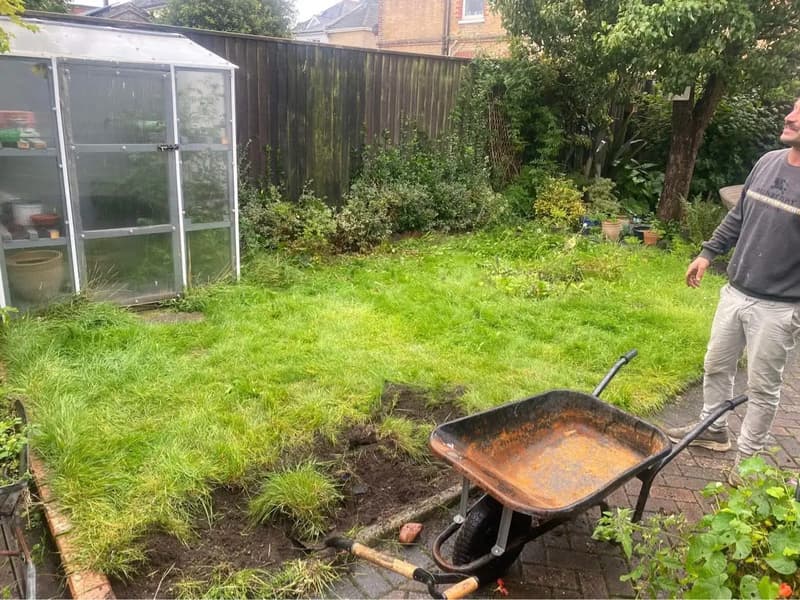
Whether a garden has been left to grow wild or you simply want the old layout gone, we clear it back to a clean, workable space. Overgrowth, tired lawns, old sheds, broken paving and rubble are taken out and removed, ready for whatever comes next.
Local installation details
Planned for your property
A sound foundation and a finish that belongs
Cleaning up gardens and ripping them out ready for a redesign are both on Ashley's list of work. Clearance is different from a digout: a digout removes soil to a set depth for a patio or base, while clearance takes away what sits on and above the ground. Many jobs start with one and lead into the other.
Ashley stays closely involved from the first conversation to the final tidy-up, so you always know who is responsible for your project.
What you can expect
- Overgrowth, brambles and tired lawn cut back and lifted
- Old sheds, fencing and broken paving taken down
- Green waste and rubble removed from site
- Ground left clear and ready for the next stage
What a garden clearance covers
No two clearances look the same, so we agree the scope at the start. Typical jobs include:
- Overgrown gardens cut back after a house move or a few years of neglect
- Old lawns lifted ready for new turf or gravel
- Rotten sheds, playhouses and broken fencing dismantled
- Cracked paving, old slabs and concrete broken out
- Rubble and buried builder's waste dug out and removed
Garden clearance before a redesign
The most useful time to clear a garden is right before a redesign, because the same visit can tell you what the ground is like underneath. Once the surface is cleared we can see the levels, the drainage and what has been buried, which makes the redesign quote far more accurate. Our homepage project of an overgrown lawn cleared and turned into a gravel garden shows that order of work in practice.
If you are not ready to redesign yet, clearing over autumn and winter still helps. The garden is quieter, the ground is easier to read without summer growth, and you can plan the next stage over the colder months.
Clearance, digout or levelling: which do you need?
These three jobs are often confused. Clearance removes what is on and above the ground. A digout removes soil to a set depth so a patio, path or base can be built. Levelling reshapes the ground itself, cutting from high spots and filling low ones. A full garden rebuild may need all three, in that order.
Protecting what you want to keep
Clearance is not about stripping everything bare. Mature trees, good shrubs, a sound boundary or an established bed can be marked at the start and worked around. Tell us what matters to you on the walk round and we will plan the clearance so those things are left alone.
Overgrown garden clearance, start to finish
An overgrown garden looks like a bigger job than it usually is. Brambles, self seeded saplings, nettles and waist high grass all come out quickly with the right machinery, and what is left underneath is often better than expected. Garden waste removal is part of the job: everything that comes out is taken away, not piled in a corner for you to deal with.
Clearance is often the first stage of something bigger. Once the ground is visible, the real shape of the garden, the state of the fences and any old paving or rubble become clear, and the next stage can be planned properly. The garden redesign page explains what usually follows.
What a clearance typically includes
Every garden is different, but a clearance usually covers some or all of the following, agreed on the site visit before any work starts:
- Cutting back and removing brambles, nettles and overgrowth
- Taking out self seeded trees and shrubs
- Removing old sheds, rotten fencing and broken furniture
- Lifting old paving, rubble and buried debris
- Taking all waste away and leaving the site tidy
Clearance before selling, letting or starting work
A clearance is often needed before a sale or a new tenancy, or simply before any other garden work can be quoted. Ashley regularly clears gardens so that levelling, turfing or paving can be measured properly, and the two stages can be planned together if that is where the garden is heading.
Also worth reading: garden clearance cost.
Pricing
What affects the price of garden clearance?
Garden clearance is priced on the volume and type of waste, not just the size of the garden. Green waste, soil, rubble and old timber are handled differently. Access is the other big factor: a garden reached only through the house means everything goes out by hand. Old structures to dismantle, roots to grub out and whether the clearance leads straight into a redesign all change the quote. We look at it on site and give you a written figure.
Timescales
How a garden clearance runs
Walk round
We agree what stays, what goes and anything to protect, such as a tree or a boundary.
Cut back
Overgrowth and brambles cut down so the ground and any structures can be reached.
Strip out
Old sheds, paving, fencing and tired turf taken out and sorted by waste type.
Clear away
Waste removed from site and the ground left clear for the next stage.
Guides
Helpful reading before you commit
What a garden digout involves
The unseen first stage of most hard landscaping. How deep, why it matters and what happens to all that soil.
Read the guide ProcessThe right order of work for a garden redesign
What comes first, what comes last, and the sequencing mistakes that force people to pay for the same work twice.
Read the guide SeasonalBook winter groundwork so your garden is ready for spring
Which garden jobs are better done in the cold months, which should wait, and how to phase the work sensibly.
Read the guideCommon questions
Garden Clearance: your questions answered
Do you take the garden waste away?
Yes. Green waste, soil, rubble and old timber are removed from site as part of the clearance, sorted by type.
Can you clear a garden with no rear access?
Yes. Where there is no side access we carry everything through by hand, with floors and walls protected on the way.
What is the difference between clearance and a digout?
Clearance removes what sits on the ground. A digout removes soil to a set depth so something new can be built.
Can you leave certain plants or trees?
Yes. We agree what stays on the walk round and work around it.
Is winter a good time for garden clearance?
Yes. The ground is easier to read without summer growth, and the garden is ready to rebuild in spring.
What does garden clearance include?
Cutting back overgrowth, removing self seeded trees, old sheds, rotten fencing, rubble and green waste, and taking everything away. The exact list is agreed on the site visit.
Do you take the waste away?
Yes. Everything that comes out of the garden is removed as part of the job, and the site is left tidy and ready for whatever comes next.
Can you clear a garden that has been untouched for years?
Yes. Long neglected gardens are routine clearance work. The machinery handles heavy overgrowth, and anything unexpected underneath is talked through before the quote is final.
What usually happens after a clearance?
Most cleared gardens go on to levelling, new turf, paving or a full redesign. Clearing first means that work can be measured and priced accurately.
How is garden clearance priced?
By the volume of growth and waste, the access, and what has to be removed. The clearance cost guide explains the factors, and Ashley confirms the figure on a site visit.
Plan ahead
Book winter groundwork so your garden is ready for spring
Autumn and winter are useful times to tackle digouts, levelling, fencing and foundations. Get the preparation done before the days get longer.
Areas covered
Local landscaping within 20 miles
Ready to improve your garden?
Arrange a free site quotation with Ashley.