Southampton and within 20 miles
Indian Sandstone Patios in Southampton
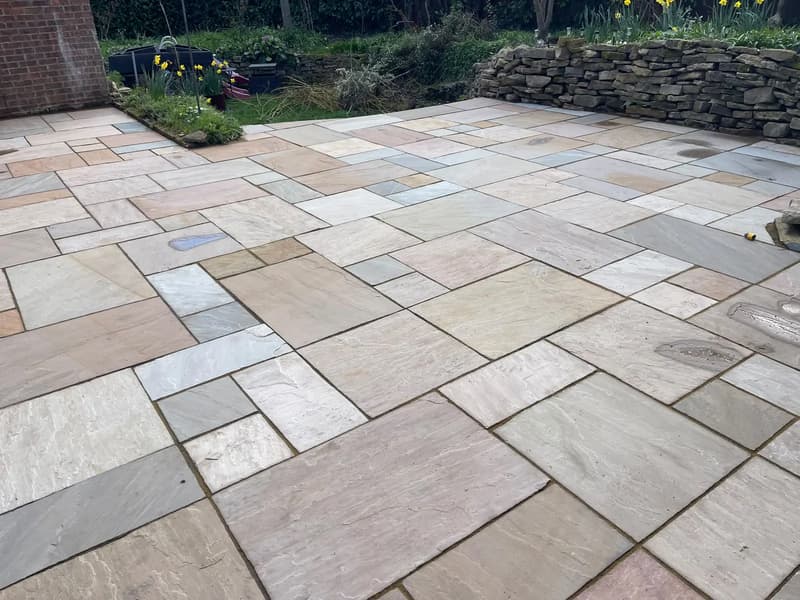
Indian sandstone is the most popular natural stone for patios in this area, with warm, varied colouring and a naturally riven surface that suits both older and newer homes.
Planned for your property
A sound foundation and a finish that belongs
Sandstone is a natural material, so no two slabs match exactly. That variation is the appeal, but it also means the laying has to be planned: the tones are mixed across the packs as the patio goes down, and the cuts at the edges are chosen to keep the pattern balanced.
Ashley stays closely involved from the first conversation to the final tidy-up, so you always know who is responsible for your project.
What you can expect
- Natural riven surface with varied tones
- Laid on a full mortar bed
- Hand cut edges and neat pointing
- Falls set so water runs away from the house
Choosing the stone
Indian sandstone comes in a range of colour blends, from greys and buffs through to warmer browns, and in different thicknesses and finishes. Riven slabs have the traditional cleft surface; sawn and honed slabs are smoother and more contemporary. Ashley talks through the options on the site visit and can show how the tones sit against your brickwork before you commit.
Whatever the finish, the build underneath is the same as any patio we lay: a proper digout, a compacted sub-base and a full mortar bed. The stone you see is only as good as the ground it sits on.
Looking after a sandstone patio
Sandstone asks for a little more care than porcelain. Sweeping keeps grit out of the surface, an occasional gentle clean lifts the algae that shaded corners attract, and the joints are worth a look each spring. If the pointing starts to fail years down the line, the patio repointing page explains how joints are renewed without lifting the slabs.
Sandstone around the rest of the garden
A sandstone patio rarely stands alone. The same stone can carry on into paths, step treads and edging so the garden reads as one scheme, and the warm tones sit well next to turf, gravel and brick. Where a wall or pillar is part of the plan, sandstone coping ties it into the paving.
The Indian sandstone project in our before and after gallery shows how the stone looks once it is laid, pointed and cleaned, around existing brickwork.
Pricing
What affects the cost of a sandstone patio?
The price of an Indian sandstone patio depends on the size and shape, the depth of digout the ground needs, the grade and thickness of the stone you choose, and how much cutting the layout involves. Access matters too: carrying slabs through a side passage takes longer than tipping them beside the patio. Ashley prices every patio after a visit, and the patio cost guide explains the ranges we typically see.
Timescales
How a sandstone patio is laid
Digout
The old surface and soil are taken out to depth and the spoil removed.
Sub-base
Stone is laid and compacted in layers, with the fall set away from the house.
Laying
Slabs go down on a full mortar bed, tones mixed across the packs, cut at the edges.
Pointing
Joints are filled once the bed has set, then the patio is cleaned down.
Guides
Helpful reading before you commit
Porcelain vs sandstone patio: an honest comparison
Weighing up natural stone against porcelain? This guide compares looks, upkeep and cost.
Read the guide CostsHow much does a patio cost in Southampton?
What a patio costs in this area and what moves the figure, explained before anyone visits.
Read the guideCommon questions
Indian Sandstone Patios: your questions answered
Does Indian sandstone need sealing?
It is not essential, but sandstone is porous, so a sealer can slow down staining and algae. It is a choice to make once the stone has fully dried out, and Ashley can talk through it on the visit.
Will sandstone slabs fade or change colour?
The tones soften a little with weathering, which most people find suits the stone. Green algae is the bigger change, and regular sweeping plus an occasional clean keeps it in check.
Is sandstone slippery in winter?
The riven surface has natural grip. Like any paving it can become slippery if algae builds up in shaded, damp spots, so keeping it clean matters more than the stone itself.
How does sandstone compare with porcelain?
Sandstone is warmer and more traditional, porcelain is denser and needs less maintenance. Our comparison guide sets out the differences, and the porcelain patios page covers the alternative in detail.
Plan ahead
Book winter groundwork so your garden is ready for spring
Autumn and winter are useful times to tackle digouts, levelling, fencing and foundations. Get the preparation done before the days get longer.
Areas covered
Local landscaping within 20 miles
Ready to improve your garden?
Arrange a free site quotation with Ashley.