Southampton and within 20 miles
Fence Post Repair and Fence Repairs in Southampton
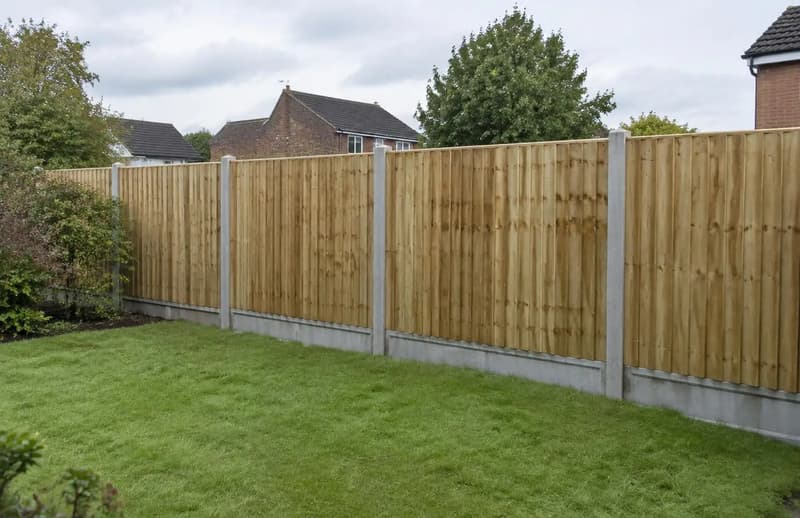
A fence that has leaned, lost a panel or snapped a post does not always need replacing. Ashley repairs fences across Southampton and about 20 miles around: new posts set to line, panels refitted or swapped, gravel boards and rails renewed, and sagging gates rehung.
Local installation details
Fencing in EastleighGarden Fencing in WinchesterFencing in FarehamFencing in PortsmouthFencing in RomseyFencing Gosport: Coastal Boundaries and Rear AccessFencing Chandlers Ford: Long, Established Garden BoundariesFencing Totton: Posts and Gravel Boards on Wet GroundFencing Hedge End: Privacy Between Estate Gardens
Planned for your property
A sound foundation and a finish that belongs
Fencing is the trade Ashley enjoys most, and repair work gets the same care as a new run. The aim is to fix the cause as well as the damage, so the repaired section stands as straight and lasts as long as the rest of the fence.
Ashley stays closely involved from the first conversation to the final tidy-up, so you always know who is responsible for your project.
What you can expect
- Snapped or rotten posts dug out and replaced
- Blown panels refitted or replaced
- Rotten gravel boards and loose rails renewed
- Leaning runs straightened and gates rehung
Repairs Ashley takes on
Most fence repairs fall into a handful of jobs, and many fences need more than one of them at once. A storm that blows out a panel often reveals the post beside it was already soft, and a sagging gate is frequently a symptom of a gate post that has started to move. On the visit, Ashley looks at the whole stretch so you know what is failing and what still has years left.
- A single snapped or rotten post
- One or more panels blown out or split
- Gravel boards rotted or broken at the base
- Close board rails and boards come loose
- A run leaning towards a neighbour or the lawn
- A side or garden gate that sags or will not latch
Replacing a snapped or rotten post
Timber posts tend to fail at ground level, where the wood stays damp. Replacing one means taking down the panels either side, breaking out the old post and its base, setting a new post to the same line and height as its neighbours, and refitting the panels. It is careful work, because a post set even slightly out shows along the whole fence.
Where one timber post has gone, those of the same age are often close behind, so the others are checked at the same time.
Refitting or replacing blown panels
If a panel has blown out in the wind but survived in one piece, it can usually be refitted into sound posts with new fixings. A panel that has split or warped is swapped for a new one of matching size. New timber will look fresher than weathered panels beside it at first, and this usually evens out as it weathers.
Gravel boards and rails
A gravel board is the plank at the base of a fence that keeps the panel off the soil. When it rots, the panel above sits in the damp and starts to fail too. Replacing rotten gravel boards early protects the rest of the fence. On close board fencing, loose or broken rails are renewed so the boards stay fixed and straight.
Straightening a leaning run
A fence that leans along its length usually has posts that have moved or rotted at the base. Pushing it upright and propping it rarely lasts. The cure is to deal with the posts holding it, which may mean resetting some and replacing others, so the whole stretch stands true again.
Gates that sag
A sagging gate is often blamed on the gate itself, but the hinge post is frequently the cause. If it has moved, rehanging the gate on the same post will not help for long. Ashley checks the posts, hinges and frame, and either rehangs, repairs or rebuilds the gate so it swings and latches properly.
When a repair isn't worth it
If several posts along the run are rotten, the panels are failing in different bays, or the fence has been repaired again and again, a new fence is usually better value than another round of repairs. You may also want to change to concrete posts or close board fencing on an exposed boundary. Our guide to repairing or replacing a fence explains how to judge it, and the fencing page covers full replacement.
What happens on the day
Before work starts, it helps to know which side of the boundary is yours, and to have spoken to your neighbour if the fence is shared. Clear plants and pots away from the fence line where you can. On the day, the damaged section is taken down, the posts dealt with, and the panels, boards and rails refitted. Old timber and broken post bases are cleared away and the area is left tidy.
Local fence repair, without replacing the whole run
When people search for fence repairs near them, the worry is usually that a small problem will be turned into a quote for a whole new fence. A snapped post, a blown panel or a sagging gate is often a repair, and Ashley says so when it is. Where the rest of the run is failing too, you get that honestly as well, with the repair and replacement costs explained side by side so you can choose.
Fence replacement only makes sense when the structure along the run has genuinely reached the end. Our guide to repair or replace sets out how to judge it before you spend anything.
Repairing close board fencing
Close board fences repair well because they are built from separate parts. A split board, a failed rail or a rotten gravel board can be swapped on its own, and the repaired section blends back into the run as it weathers. If you are considering a new close board fence rather than more repairs, the close board page explains how it is built.
Pricing
What decides the cost of a fence repair?
Repairs are priced once Ashley has seen the fence, because the work depends on what has failed and why. The main factors are how many posts need replacing and whether they are timber or concrete, whether the panels can be reused, how the old post bases come out, the height of the fence, and access along the boundary. If most of the run is failing, he will say so, and a replacement may be the better spend.
Timescales
How a fence repair is carried out
Check the run
Every post along the affected stretch is tested, not only the ones that have gone, so the repair covers the real problem.
Take down
Panels or boards either side of the damage are removed carefully and set aside for refitting where they are sound.
Replace and set
Failed posts and their old bases are dug out, and new posts set to line and height.
Refit
Panels, gravel boards and rails go back, the run is checked for line and the area is left tidy.
Guides
Helpful reading before you commit
Fence repair or replacement: which does your fence need?
How to tell whether a blown panel, leaning post or rotten board can be fixed on its own, or whether the whole run is due.
Read the guide ComparisonsConcrete vs timber fence posts
How concrete and timber posts compare on lifespan, wind, looks and cost, and why fences blow down in storms.
Read the guide CostsFence installation cost in Southampton
Per bay prices for panel and close board fencing, what concrete posts add and the cost of clearing the old run.
Read the guide ProcessRotten Fence Posts: Dealing with a Storm-Damaged Fence
Rotten fence posts can let an otherwise serviceable fence lean or collapse when strong wind arrives.
Read the guideCommon questions
Fence Repairs: your questions answered
Can you replace one fence post without replacing the panels?
Yes. The panels either side are taken down, the post replaced, and the same panels refitted if they are still sound.
Will new panels match my existing fence?
A matching size and style is sourced where possible. New timber looks fresher at first and tends to tone in as it weathers.
How quickly can a storm-damaged fence be made safe?
Call Ashley on 07904 481178 to describe the damage. In the meantime, move loose panels somewhere they cannot blow and keep people clear.
Can you swap timber posts for concrete during a repair?
Often, yes, where the panels suit concrete posts. It is worth considering on a boundary that keeps losing posts to rot or wind.
Do I need to be home while the fence is repaired?
Not necessarily, as long as there is access to the fence and the work has been agreed. Many people are out while it is done.
How much does fence repair cost?
It depends on what has failed: how many posts need replacing, whether panels can be reused, how the old post bases come out, the height of the fence and the access along the boundary. Ashley prices the repair after seeing the fence, and tells you if replacement would be better value.
Can I repair my fence myself?
Refitting a light panel between sound posts is within reach for a confident DIYer. Post replacement is heavier work: the old concrete base has to come out and the new post set exactly to line, or the whole run shows it. A poorly set post usually costs more to put right later.
How much does it cost to replace a fence post?
The figure depends on whether the post is timber or concrete, how the old base comes out, the depth needed and how easy the boundary is to reach. Where several posts have gone together, the cost per post usually drops because the setup is shared.
My fence leans after every storm. What is the real cause?
Almost always the posts. Timber posts rot at ground level where they stay damp, and once they move the panels above lever them further. The lasting fix is dealing with the posts, not propping the panels.
Plan ahead
Book winter groundwork so your garden is ready for spring
Autumn and winter are useful times to tackle digouts, levelling, fencing and foundations. Get the preparation done before the days get longer.
Areas covered
Local landscaping within 20 miles
Ready to improve your garden?
Arrange a free site quotation with Ashley.