Southampton and within 20 miles
Garden Decking in Southampton
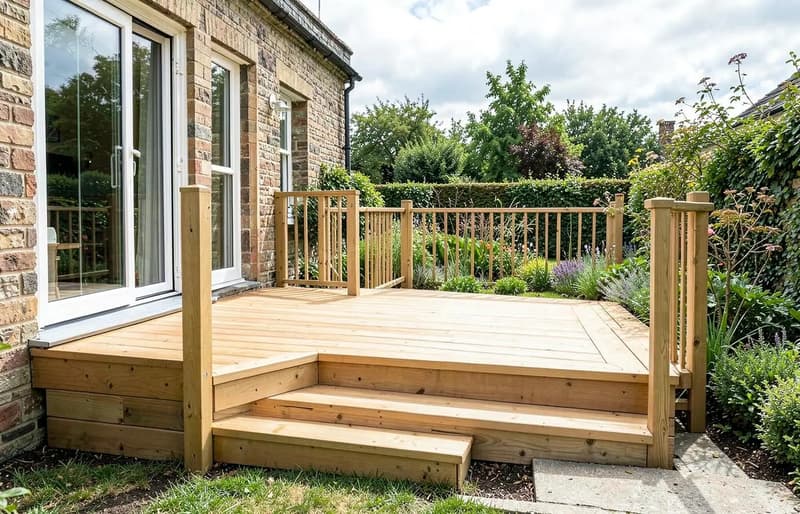
Beautifully finished decking that creates a comfortable, usable connection between home and garden.
Local installation details
Planned for your property
A sound foundation and a finish that belongs
Whether you want a dining terrace, a sunny seating area or an answer to a sloping garden, we build decking around the way your space needs to work.
Ashley stays closely involved from the first conversation to the final tidy-up, so you always know who is responsible for your project.
What you can expect
- Timber and composite choices
- Strong subframe construction
- Steps and edges finished neatly
Composite decking installation
If you have already decided on composite boards, our composite decking page explains how the frame, gaps and fascias are built to suit them.
Repairs to existing decks
Not every tired deck needs replacing. Where the frame underneath is still sound, soft or split boards can be swapped, loose screws refixed and a slippery surface cleaned so it drains properly. If the joists or posts have rotted, new boards on top will not last, and rebuilding the frame is the honest answer. Ashley checks the frame on the visit before suggesting either. Our guide to decking repair explains how to spot which situation your deck is in.
Timber decking, from frame to finish
Timber decking remains the most flexible way to create a level seating area, especially where the garden slopes. The frame is built from treated joists on posts or pedestals, set level regardless of what the ground does underneath, and the boards are fixed with gaps for drainage and expansion. Raised decking uses the same principles with taller supports and, where the height calls for it, balustrades and steps planned in from the start.
As decking fitters, the part we spend longest on is the frame, because it decides how the deck feels underfoot and how long it lasts. Joist spacing, ventilation beneath the boards and keeping timber clear of standing water matter more than the board pattern on top. If you are comparing materials, the composite decking page covers the low maintenance alternative.
Planning permission and treating timber decking
Most garden decks need no planning permission, but height is the key factor: a raised deck above a certain level, or one that overlooks neighbours, can need approval. The rules sit with your council, so check the Planning Portal or ask them before building anything high off the ground.
Timber decking does need treating to reach its full life. Boards and frame timbers are pressure treated before they arrive, and a decking oil or stain on the surface keeps water out and slows the greying that sun and rain cause. Cleaning the deck once a year and re-oiling when water stops beading on the surface is the routine that keeps it sound.
Decking cleaning and looking after the boards
A deck that has gone green is usually structurally fine. Algae sits on the surface and comes off with a stiff brush and a suitable cleaner, or a careful wash kept at a distance so the timber is not raised. Slippery decking in winter is almost always algae in a shaded spot, and cleaning rather than replacing is the answer.
Where boards have genuinely rotted or the frame has softened, individual boards and joists can be replaced without rebuilding the whole deck. Ashley will tell you on the visit which situation yours is in.
Costs
Decking cost, timber against composite
Two figures matter with decking: the boards and the structure holding them up. A raised deck on a slope carries far more timber underneath than a low deck on flat ground, so height changes the price more than area.
Guide figures only, based on recent local work. Your quotation follows a site visit.
Timescales
Building your deck
Setting out
Shape marked out on the ground and the finished height agreed with you.
Subframe
Bearers and joists fixed level on solid pads or footings.
Boards
Boards laid with even gaps for drainage and airflow.
Trim and steps
Fascia, steps and edges fitted so nothing catches underfoot.
Guides
Helpful reading before you commit
Decking cost in Southampton: timber against composite
What a deck costs to build, why height matters more than area, and which board is cheaper over ten years.
Read the guide ComparisonsPatio or decking: which is right for your garden?
A straight comparison on cost, upkeep, lifespan and sloping ground, with no preference for the dearer option.
Read the guide ProcessHow long does decking take to build?
What decides whether a deck takes a couple of days or longer, and what you will see happen on each day of the build.
Read the guide ComparisonsComposite vs timber decking: is composite worth it?
Build cost, maintenance, look and lifespan of composite and softwood decking compared side by side.
Read the guide ProcessDecking Repair: Boards, Joists or Replacement?
How to check a tired deck from the boards down to the posts, which faults can be fixed on their own, and when a rebuild is the honest answer.
Read the guide ProcessDo I Need Planning Permission for Decking?
In England, decking at a house may be permitted development if it is no more than 30cm above ground and decking, other extensions and outbuildings together cover no more than 50% of the garden.
Read the guideCommon questions
Decking: your questions answered
Is composite decking worth the extra cost?
If you want to stop sanding and oiling every year, yes. Composite costs roughly half again on materials but needs little more than a wash once the season ends.
Does decking get slippery in winter?
Untreated timber can in shade. We set the gaps and fall so water runs off, and grooved or textured boards help a great deal on north facing gardens.
Can decking be built on a slope?
Yes, and it is often the tidiest answer to a sloping garden because a deck can span the drop without a full digout and retaining wall.
How long does decking take to build?
A straightforward garden deck takes two to four days. Raised decks with steps and balustrade take longer because the structure is doing more work.
What maintenance does a timber deck need?
A brush and wash each spring and a fresh coat of decking oil or stain roughly every year or two keeps the timber sound and the colour even.
Do I need planning permission for decking?
Usually not for a low garden deck. Height is the deciding factor, along with how much of the garden is covered and whether neighbours are overlooked. Check the Planning Portal or your council before building a raised deck.
Do I need to treat decking?
Yes. The timber arrives pressure treated, but a surface oil or stain keeps water out and extends the life of the boards. Reapply when water stops beading on the surface, typically every year or two.
Can decking go on a sloping garden?
Yes, and it is one of the best uses for it. The frame is levelled on posts or pedestals, so a slope that would need major digging for a patio can carry a deck with far less groundwork.
How do I stop my decking being slippery?
Slippery decking is almost always algae. A yearly clean, keeping leaves off the boards and treating the surface keeps grip. Shaded, damp corners need the most attention.
Plan ahead
Book winter groundwork so your garden is ready for spring
Autumn and winter are useful times to tackle digouts, levelling, fencing and foundations. Get the preparation done before the days get longer.
Areas covered
Local landscaping within 20 miles
Ready to improve your garden?
Arrange a free site quotation with Ashley.