Southampton and within 20 miles
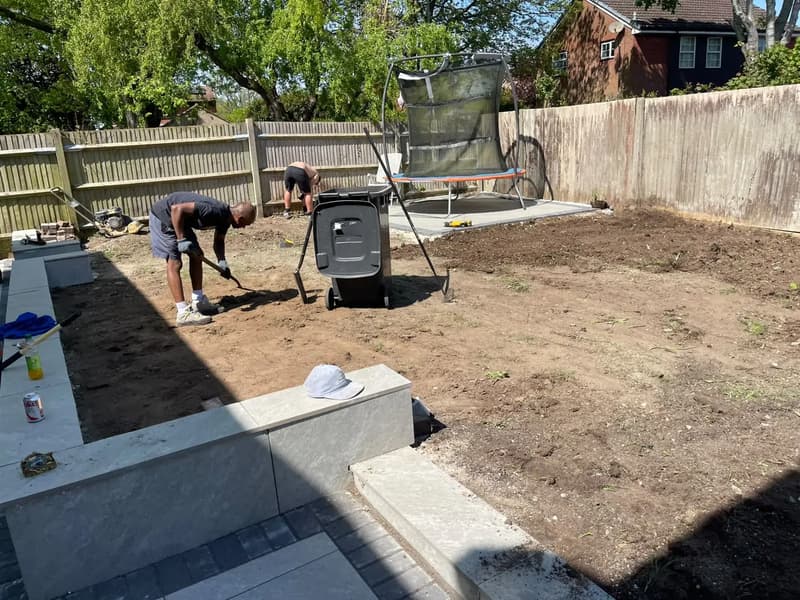
Garden Levelling in Southampton
Careful levelling and relevelling to make uneven gardens safer, easier to maintain and ready for their next use.
Planned for your property
A sound foundation and a finish that belongs
Changes in level can hold back an otherwise promising garden. We reshape the ground, manage spoil and create stable levels for lawns, patios, paths and family spaces.
Ashley stays closely involved from the first conversation to the final tidy-up, so you always know who is responsible for your project.
What you can expect
- Accurate level planning
- Ground moved and compacted
- Ready for turf, patios or redesign
Garden levelling services, from one lump to a full regrade
Garden levelling covers everything from taking the bumps out of a lawn to reshaping a whole plot. At the small end, shallow hollows are top-dressed or the turf is lifted and the soil corrected beneath it. At the large end, a sloping or badly sitting garden is regraded: soil moved from high to low, firmed in layers and set to a finished level that works with the patio and the house.
If it is specifically the lawn that bothers you, our guide to levelling a bumpy lawn helps you work out which scale of fix yours needs before anyone visits. For the bigger jobs, the what to expect guide walks through the process stage by stage.
Levelling grass and getting the levels right
Getting a garden level is not about making everything flat. A lawn wants a gentle, even surface; the ground by the house wants a fall away from the walls; and where the garden meets a patio or path the levels have to match so water does not sit at the join. Setting those finished levels is the skilled part of the job, and it is agreed with you before the soil starts moving.
Levelling often sits alongside other work: a digout where ground has to come out, retaining where a slope is being held, or turfing once the new levels are ready for grass.
Also worth reading: levelling a bumpy lawn.
Costs
What garden levelling costs
Levelling is priced on how much soil has to move and where it goes. Cutting into a slope and carting the spoil off site costs far more than shifting the same soil a few metres to fill a dip.
Guide figures only, based on recent local work. Your quotation follows a site visit.
Timescales
How a level is created
Levels taken
We measure the fall across the garden and set the finished height.
Cut and fill
High ground taken down, low ground built up and compacted in layers.
Retaining
Sleepers or a low wall added where a change in level needs holding.
Handover
Surface graded ready for turf, slabs or the next stage of the redesign.
Guides
Helpful reading before you commit
How much does it cost to level a garden?
Cut and fill rates, spoil removal per load and why holding a new level costs more than creating it.
Read the guide ProcessHow to make a sloping garden usable
Terracing, decking, planted banks and steps compared, with the costs and the trade offs of each on a real fall.
Read the guide SeasonalBook winter groundwork so your garden is ready for spring
Which garden jobs are better done in the cold months, which should wait, and how to phase the work sensibly.
Read the guide SeasonalWhy your lawn stays waterlogged, and how to fix it
Puddles that never drain usually have one of four causes. How to spot which, and what a lasting fix looks like.
Read the guide ProcessGarden levelling: what to expect when the ground is reshaped
How to tell whether your garden needs levelling, what happens on site, and how the work sets up a patio, lawn or deck.
Read the guide IdeasSleeper retaining walls and terracing a sloping garden
How sleeper walls hold a new level, sensible heights, drainage behind the wall and terracing a slope.
Read the guideCommon questions
Garden Levelling and Relevelling: your questions answered
How much does it cost to level a garden in Southampton?
Small regrading jobs start around £800. A sloping garden that needs machine cut and fill with spoil taken off site more often runs between £2,200 and £5,000.
Can a sloping garden be made completely flat?
Usually you want one or two usable flat terraces rather than one flat plane, because holding a single level on a slope means far more retaining and far more cost.
Where does the soil go?
We reuse what we can on site to fill low ground, and only the surplus is carted away, which keeps the removal cost down.
Is winter a bad time for levelling?
Not at all. Levelling and digouts are ideal winter jobs, and getting them done now means turf or paving can follow as soon as spring arrives.
Will heavy machinery damage my garden?
We match the machine to the access, board out routes across lawns where needed, and make good any tracking before we leave.
How do I know if my garden needs levelling or just the lawn fixing?
If the bumps are shallow and local, the lawn itself can usually be corrected. If the whole garden slopes, rolls or sits wrong against the patio, the ground needs regrading. Our bumpy lawn guide helps you tell the difference.
Can a sloping garden be made level?
Yes, by cutting it into level areas with retaining where needed, or by regrading the slope into gentler, usable levels. The right approach depends on how much fall there is and how you want to use the space.
When is the best time of year for garden levelling?
Autumn and winter suit the groundwork well, so the new levels are ready for turf or seed as the growing season starts. Frozen or waterlogged ground is avoided.
Does levelling a garden mean removing soil?
Sometimes soil is taken away, but where possible it is moved from high areas to low ones on site, which keeps the cost and the lorry movements down. It is worked out on the site visit.
Plan ahead
Book winter groundwork so your garden is ready for spring
Autumn and winter are useful times to tackle digouts, levelling, fencing and foundations. Get the preparation done before the days get longer.
Areas covered
Local landscaping within 20 miles
Ready to improve your garden?
Arrange a free site quotation with Ashley.