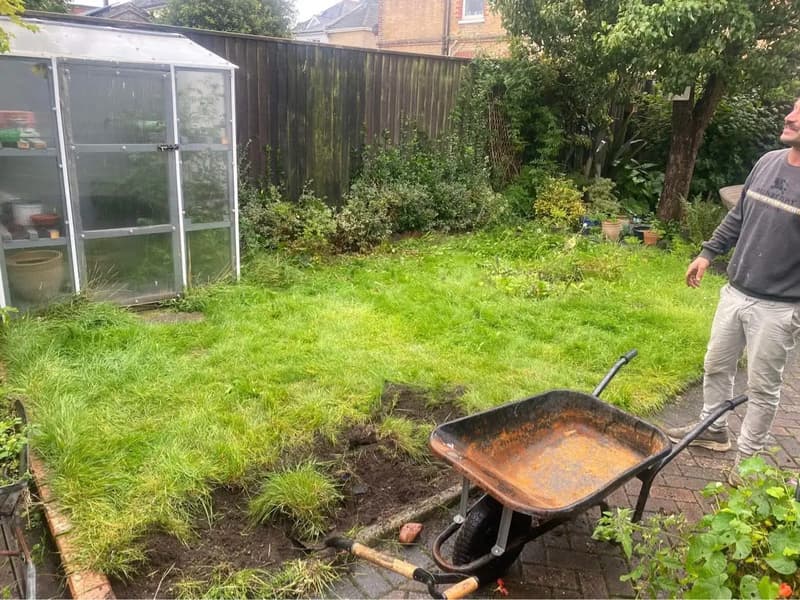
Garden Clearance Portsmouth: Rubble and Hand Removal
Garden clearance in Portsmouth starts with local considerations: who can authorise the work, the size of the plot, the carrying route and the material to remove. Ashley assesses the contents and access himself before quoting, with clearance defined as an agreed scope rather than an unlimited promise to empty everything. Identify what stays as carefully as what must leave.
Free site quotationLocal considerations before clearing the garden
Four checks help define the clearance before a visit. Use the city-wide facts as context, then describe the actual contents, permissions and route at your address.
- Permission and tenancy: across Portsmouth city, 52.3% of homes are owner-occupied, 28.6% privately rented and 18.0% socially rented. End-of-tenancy garden enquiries are therefore relevant, but a tenancy does not authorise every alteration. Establish who is instructing the work and which items belong to the landlord or occupier before removal.
- Housing and carrying routes: across Portsmouth city, 43.4% of homes are terraced and 35.5% are flats. A terraced garden may require waste to pass through the house. Check doors, steps and any shared passage at the actual property, and discuss a suitable collection position rather than assuming there is room outside.
- Plot size and housing era: Paulsgrove’s council estates were completed in 1953. Larger post-war mainland plots and small island yards can present different clearance quantities; the district name alone cannot establish how much waste is present. Record the material and the usable removal route before comparing quotations.
- Authority and agreed scope: Portsmouth City Council is the unitary planning authority. Check any relevant restrictions before altering retained structures or protected features. Separate ordinary agreed clearance from unknown materials, demolition or work needing further advice; a garden photograph does not establish that everything is safe to remove.
Different districts, a property-specific carrying plan
Old Portsmouth, Southsea, Portsea, Landport, Buckland, Fratton, Cosham, Paulsgrove, Farlington and Eastney locate different parts of the city, within postcode districts PO1–PO6. Use the address to identify the actual garden, not to predict its contents. A Paulsgrove plot and an island rear yard may require different handling arrangements, but both need a clear inventory and an agreed route to collection.
Where removal must pass through the home, explain narrow doors, internal corners, stairs and changes in level. Agree protection and where loads can wait without blocking normal access. Broken concrete can require substantial handling even in a small yard. Neighbour access or a shared passage should only be included in the plan once permission is established, and a machine route should not be assumed from the size of the garden.
Distinguish loose rubble from a surface that must be lifted
Clearing already broken material differs from removing an intact slab or concrete area. Explain whether the hard surface is loose, bedded or part of something you intend to retain. Lifting can reveal another layer beneath, so agree how unforeseen material will be assessed before extending the scope. A tidy photograph after clearance should not disguise that uncertainty in the original ground.
If the cleared area will become a patio or lawn, discuss the next surface before deciding where removal ends. Exposing soil is not the same as producing a finished turfing base, and removing concrete does not automatically create suitable levels for paving. Coordinate the stages while keeping their purposes separate. The related service hubs explain preparation beyond clearance without claiming every enquiry needs a complete garden rebuild.
Make the quotation specific enough to compare
The garden-clearance cost guide describes the drivers rather than assigning one price to every yard. Material type, quantity, access and handling all need considering together. Ask which removal is included and whether the cleared ground will be left ready for assessment or prepared for a separately agreed next stage. Existing approved figures, where applicable, stay on the relevant site pages.
When contacting Ashley, give the location, what is being removed, what remains and how the rear garden is reached. Include any restrictions on collection or use of a shared route. A free visit can then establish a workable order without promising a fixed duration before the contents are known. The aim is a clearly defined clearance that leaves the next decision easier, not an invented description of a completed Portsmouth job.
Common questions
Questions about garden clearance portsmouth: rubble and hand removal
Can a Portsmouth landlord request an end-of-tenancy garden clearance?
Yes, explain the agreed work and who has authority to instruct it. Identify retained possessions and tenant or landlord items before removal; the quoted scope should not depend on assumptions about ownership.
How should a through-house clearance route be agreed?
Describe the doors, turns, steps and proposed collection position. Agree protection and shared-access permissions before work, so carrying material does not rely on an unapproved neighbour route.
Will all waste found in a Portsmouth garden be taken away?
Only the agreed material and removal are included. Describe known rubble, paving and vegetation, and flag anything uncertain. Unexpected or potentially hazardous material needs assessment before the scope changes.