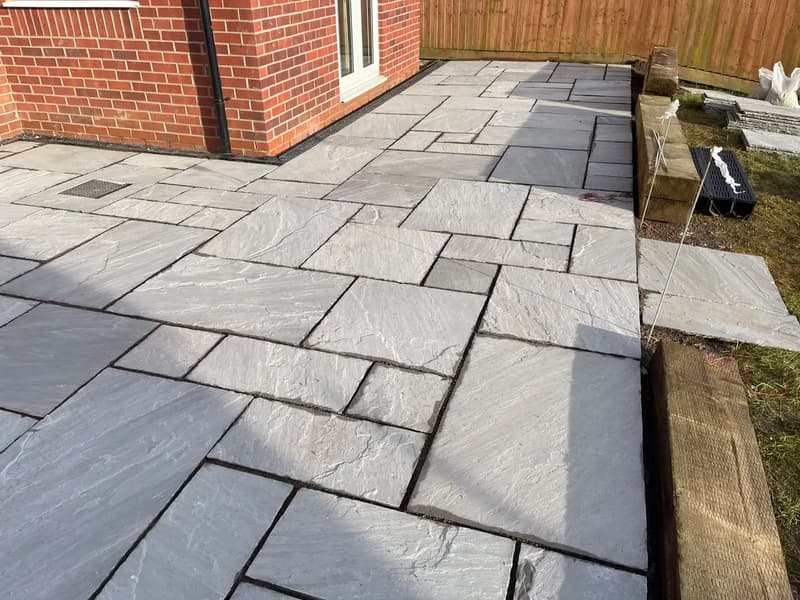
Patios Winchester: Natural Stone Beside Older Homes
Patios in Winchester start with the ground: Cretaceous lower chalk, small clay and loam areas and fuller’s earth can give different conditions across a proposed footprint. Ashley carries out the work himself, assessing access, levels and preparation before discussing natural stone or porcelain. Freely draining chalk is useful context, not a complete foundation specification or proof that every plot has the same soil.
Free site quotationWhat we look at: the ground and water route
Check the proposed paving footprint for clay pockets and changing ground before setting falls. Rainwater should follow an appropriate route rather than collect beside the house or at a lawn edge. A patch that looks firm on the surface may have a different layer below an old patio, so consider support and drainage together before choosing excavation depth.
Winchester City Mill and the Guildhall of 1871 orientate the city, while SO22 and SO23 help locate an enquiry. These facts do not tell us which material lies beneath a garden. Describe existing paving, low points and what must remain; Ashley assesses the actual work area rather than assuming hard flint or a steep slope at every address.
What we look at: sitting space and the wider scheme
Across the City of Winchester district, 36.2% of homes are detached. That wider-district figure gives context for larger garden schemes but does not measure a city plot. Set out the sitting area, furniture clearance and walking route before agreeing how much ground will become patio. A generous space can still need careful positioning so paving, lawn and planting work together.
The South Downs National Park setting can favour natural stone and a sympathetic finish where they suit the property. Compare samples in the actual light, without assuming an older home always needs sandstone or that porcelain is unsuitable. Foundation, bedding, joints and supporting edges remain part of the same proposal whichever visible finish is selected.
Connections to steps, lawn and retained paving
Where levels change, decide the walking route and any steps before finalising the slab layout. A doorway, retained path and lawn must meet the new sitting space at agreed heights. Neither the town’s chalk geology nor the detached-housing percentage proves a slope exists in your garden.
Check the lower edge beside soil and how surface water will leave it. Retaining work or a raised patio needs its own scope assessment rather than being assumed part of ordinary laying. This discussion protects the relationship between the new surface and the retained garden, not a claim that Ashley has built a particular local patio.
Compare surfaces with preparation included
The porcelain-versus-sandstone guide helps separate appearance, finish and installation considerations. Use it alongside samples and the site's existing patio service details. A surface choice needs to work with the agreed levels, joints and water route. Planning restrictions affecting an older or protected property should be checked with the council where relevant before committing to changed outdoor levels or structures.
Explain the current paving, access and any retained features when asking Ashley for a free site quotation. The Winchester town hub gives the wider garden context, while the main patio page keeps the approved cost guidance. Compare complete proposals including lifting, foundation, bedding and edges. This page introduces no new local price and describes planning considerations, not a claim of a named or completed Winchester installation.
Common questions
Questions about patios winchester: natural stone beside older homes
Can patio preparation be planned through a Winchester winter?
Discuss the sequence at the free visit. Rain can show water routes, but frost or waterlogged clay pockets may delay preparation or laying. No timetable is promised simply because chalk is usually freely draining.
How are patio falls decided where chalk meets clay?
Assess the proposed footprint and water route first. Clay or loam pockets and fuller’s earth mean ground can vary, so the fall and supporting layers are planned for the property rather than a single city-wide assumption.
Do National Park-edge patios have to use natural stone?
No automatic material rule is claimed here. Natural stone can suit the setting, but compare it with porcelain and check relevant restrictions for the address. Appearance, joints, foundation and the intended use all inform the choice.