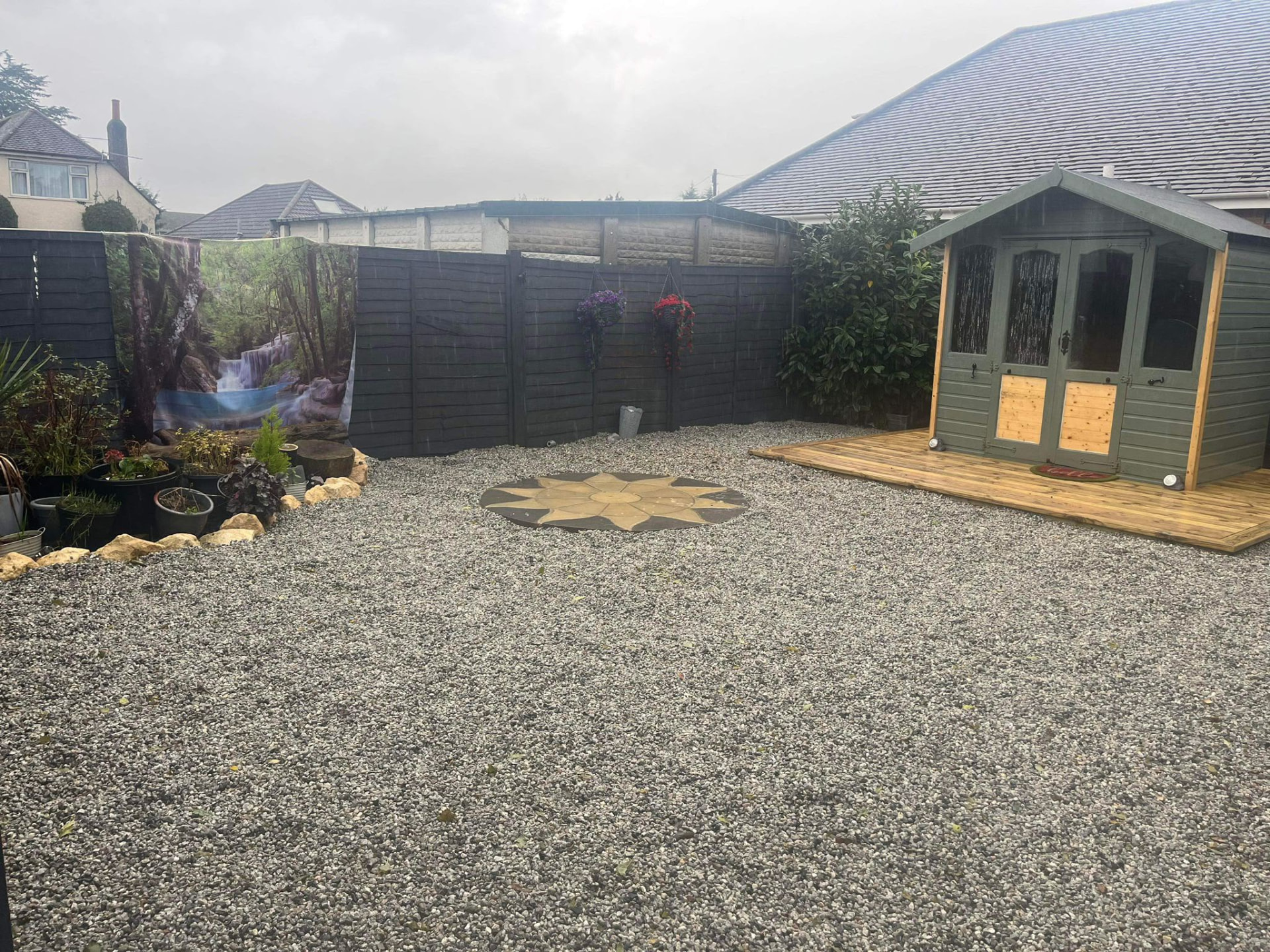
What winter is good for
Digouts, levelling, spoil removal, fencing, retaining and base preparation all go ahead perfectly well in cold, damp weather. There is no lawn to establish and no mortar sitting exposed to frost.
Winter is also when you can actually see where water goes in your garden, which makes it the honest time to price drainage.
- Garden and driveway digouts
- Levelling, terracing and retaining
- Fencing and gates
- Drainage, channels and soakaways
- Shed and greenhouse bases
What is better left until spring
Jointing and slab laying pause in hard frost, because mortar will not cure. Turf laid on frozen ground is a waste of money. Planting is happier once the soil warms.
None of that stops the project. It just means the order of work changes.
Phasing a project across two seasons
The pattern that works best is groundwork and boundaries over the winter, then surfaces and turf in the first settled spring weather. The heavy, messy stages happen when you are using the garden least.
It also spreads the cost across two seasons rather than one invoice, and it means your job is already on site when the spring rush starts.
The practical advantage
Lead times are shorter in the cold months. A garden booked in November is usually on site within weeks, while the same enquiry in April joins a queue behind everyone else who left it late.