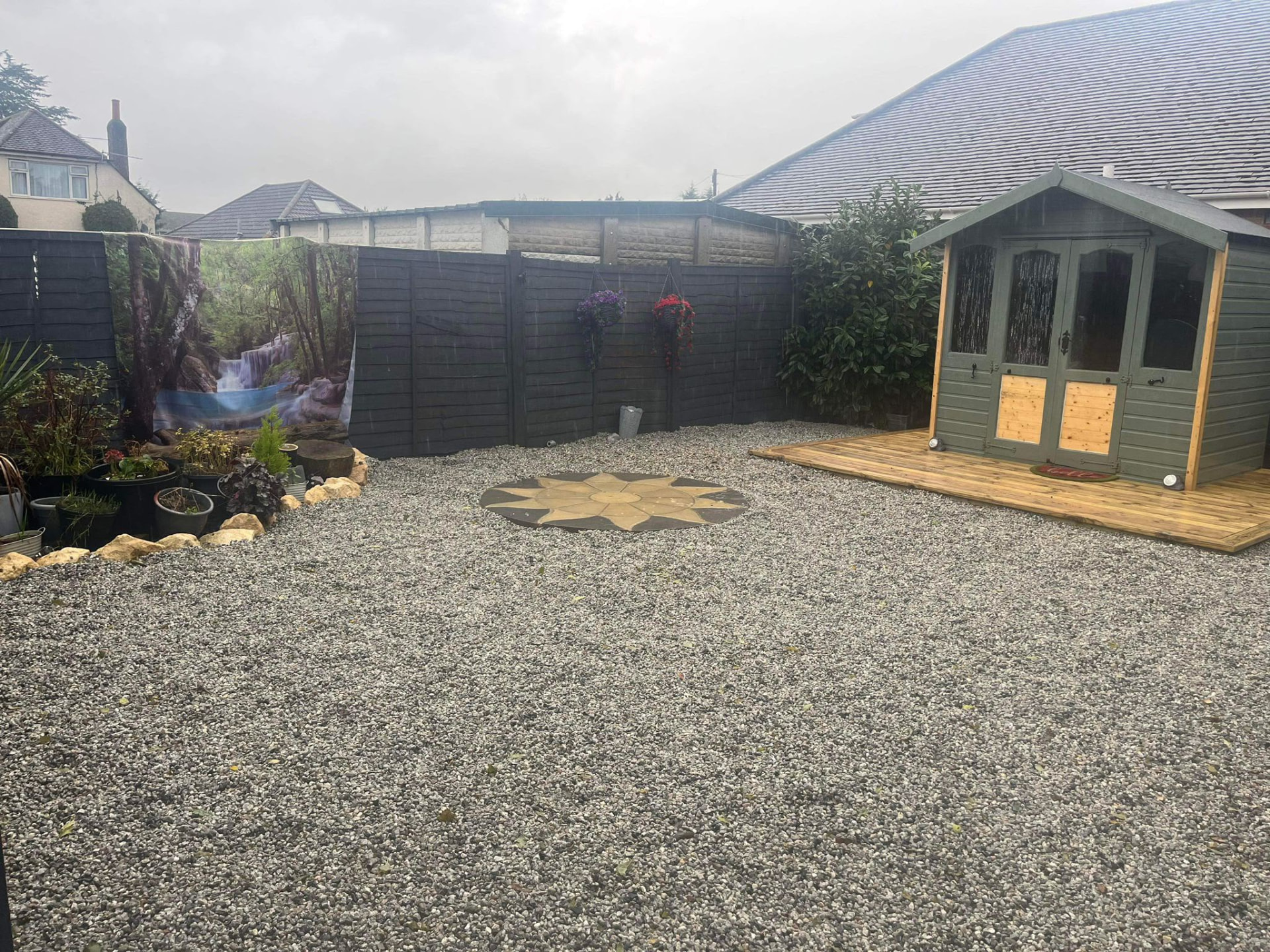
Stage one: clearance and levels
Everything starts with an empty, measured garden. Clearance, digouts and levelling come first, with the waste removed as it comes out rather than stockpiled where the next stage needs to work.
Levels are set now, in writing, because every surface that follows is built off them.
Stage two: drainage and services
Anything that runs under the garden goes in while the ground is open: drainage channels, soakaways, outdoor tap runs, cable ducts for lighting. Adding these after the paving is down means lifting the paving.
Stage three: boundaries and structures
Fencing, retaining and sheds come before surfaces. Post holes need digging and concreting, and doing that after a new patio means either working over finished paving or damaging it.
This is the single most common mistake we are asked to put right.
Stages four and five: surfaces, then soft landscaping
Patios, paths and decking are built off the finished levels once the heavy plant and deliveries are done. Then, last, turf, gravel, topsoil and planting.
Turf goes down at the very end because it is the one element that cannot take a barrow wheel or a stack of slabs.
- Clearance, digout and levels
- Drainage, ducts and anything buried
- Fencing, retaining, sheds and bases
- Patios, paths and decking
- Topsoil, turf, gravel and planting
Phasing it sensibly
The natural split is stages one to three over autumn and winter, then surfaces and turf in spring. That keeps the messy work out of the months you use the garden and spreads the cost across two seasons.