Start with how the path will be used
Before thinking about looks, think about traffic. A path to the bins that is used every day in all weathers needs to be firm and even. A route through a planted border that you wander along at weekends can be softer and more informal.
Think about wheels too. Bins, wheelbarrows, bikes and pushchairs all behave very differently on gravel compared with a solid surface.
- How often it is used, and in what weather
- Whether wheels need to roll along it
- Whether it needs to be lit or seen clearly at night
- How much upkeep you are happy to do
Slabbed paths
A slabbed path laid on a proper base gives a firm, even surface that is easy to walk, easy to sweep and easy for wheels. It suits main routes, such as from the back door to a gate or shed, and can be matched to a patio so the garden feels joined up.
The quality lives underneath. Slabs need a dug out, compacted base and full bedding so they do not rock. A fall built in stops puddles sitting on the surface.
Gravel paths
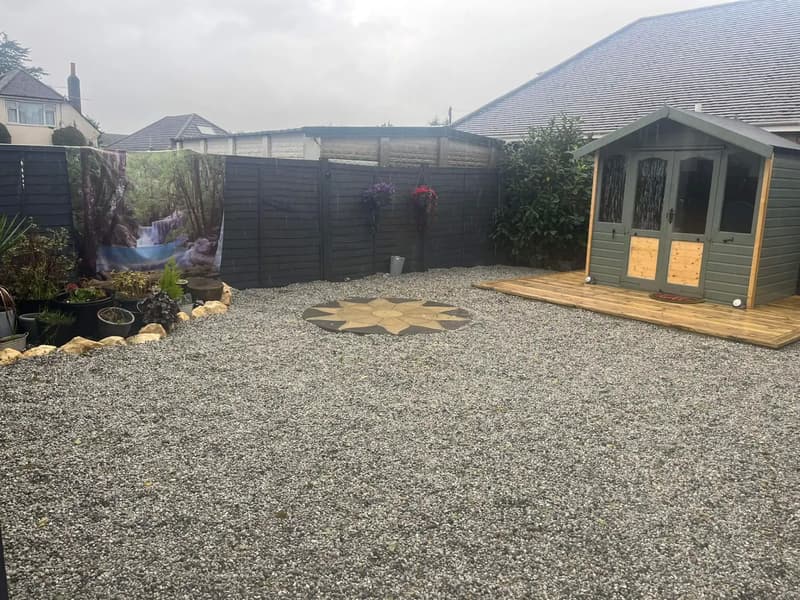
Gravel is relaxed, drains freely and suits informal gardens and cottage style planting. It is also useful where water would otherwise pool, because rain passes straight through.
Its downsides are practical. Wheels sink and push it around, it tracks into the house on shoes, and without firm edging it spreads into lawns and beds. A membrane underneath and solid edges on both sides make a big difference to how it behaves.
Pathways
- Straight or flowing layouts
- Drainage and levels considered
- Materials chosen to suit the garden
Stepping stones
Stepping stones set into a lawn or gravel are a light touch option for a route that is used occasionally. They keep the look of the garden soft while stopping a worn track appearing in the grass.
Spacing is everything. Stones set to a natural stride are comfortable; stones set too far apart or too close make people step on the grass anyway. Setting them slightly below lawn level lets a mower pass straight over.
Edges, width and falls
Whichever surface you choose, the details decide how it looks in a year. Firm edging keeps a path crisp and stops gravel or soil creeping. Enough width lets two people pass or a bin roll without clipping a border. A gentle fall sends rain to the side rather than leaving puddles in the middle.
Where a path meets a patio, lawn or step, the levels need to line up so there is no trip edge. That is much easier to get right during the build than to fix afterwards.
Mixing materials
Many gardens use more than one. A slabbed main route near the house for everyday use can lead to gravel or stepping stones further down the garden where it becomes more relaxed. Planning them together keeps the garden feeling deliberate.
If you would like help choosing what suits your garden, call Ashley on 07904 481178 and we can look at how the path will be used.