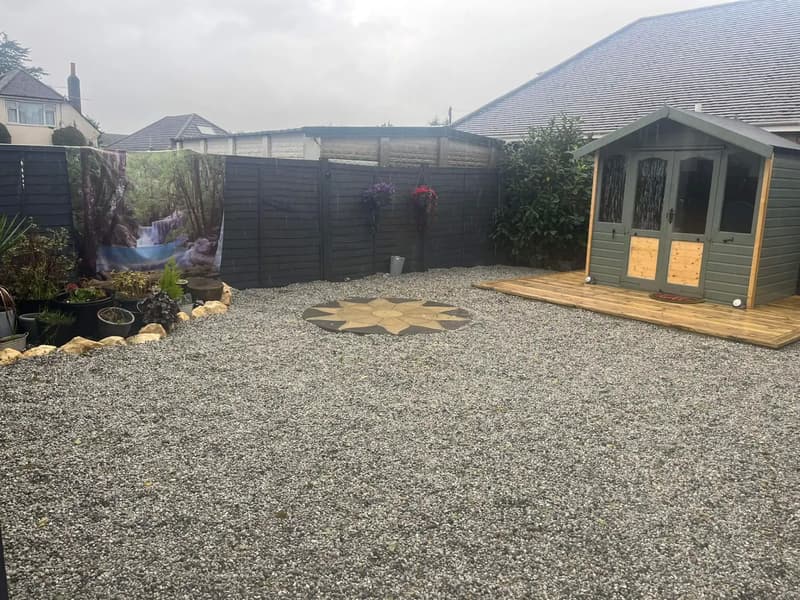
Why a shed needs a proper base
A timber building sitting on soil or on a few loose slabs is always slightly out of true. As the ground moves through the seasons, the frame racks, doors bind and windows stop closing properly. The floor sits in damp and starts to rot.
A flat, firm slabbed base keeps the building square and lifts it clear of wet ground. It is a small job compared with the building itself, and it protects what you have spent on it.
Getting the size right
The base should be at least the footprint of the building, and usually a little larger so rain running off the roof lands on a hard surface rather than splashing mud onto the walls. Check the building's actual dimensions, including any overhang, rather than the size printed on the box.
Think about access as well. A strip of slabbing in front of the doors, or along the side you will walk, stops that area becoming a muddy track.
- Match or slightly exceed the building footprint
- Allow for roof overhang and rainwater
- Add an apron in front of doors if the area gets used
- Leave space to reach the back and sides for maintenance
Level, but not quite flat
A shed base needs to be level so the building sits square. A patio, by contrast, is laid with a deliberate fall. Bases for bins or storage can take a slight fall so water runs off, but anything a building stands on must be true.
Getting that right starts at the digout. The soft ground is removed, a compacted sub-base goes in and the slabs are bedded fully so none of them rock. Measuring across both diagonals confirms the base is square before the building goes on.
Slabbing
- Strong prepared base
- Consistent falls and joints
- Options for varied garden uses
Dealing with sloping ground
Many sheds end up at the bottom of the garden, which is often where the ground falls away or collects water. On a slope, the base may need building up on one side, sometimes with a small retaining edge, so it finishes level.
Where the ground is wet, keeping the base slightly raised and making sure water has somewhere to go stops the area turning into a puddle around the building.
Bin stores and hard standings
A slabbed area for bins takes a lot of repeated use, with wheels rolling on and off it every week. It should be firm, even and joined to the path so bins roll smoothly without catching an edge.
The same applies to pads for water butts, compost bins and storage boxes. A water butt in particular is heavy when full, and a base that sinks on one side will tip it over time.
Doing it at the same time as other work
If you are already having a patio, path or garden redesign done, adding a base for a shed or bins at the same time is straightforward, and the materials and levels can be matched across the garden. It is also good autumn and winter work, so the building can go up in spring.
To talk through a base for your garden, call Ashley on 07904 481178.