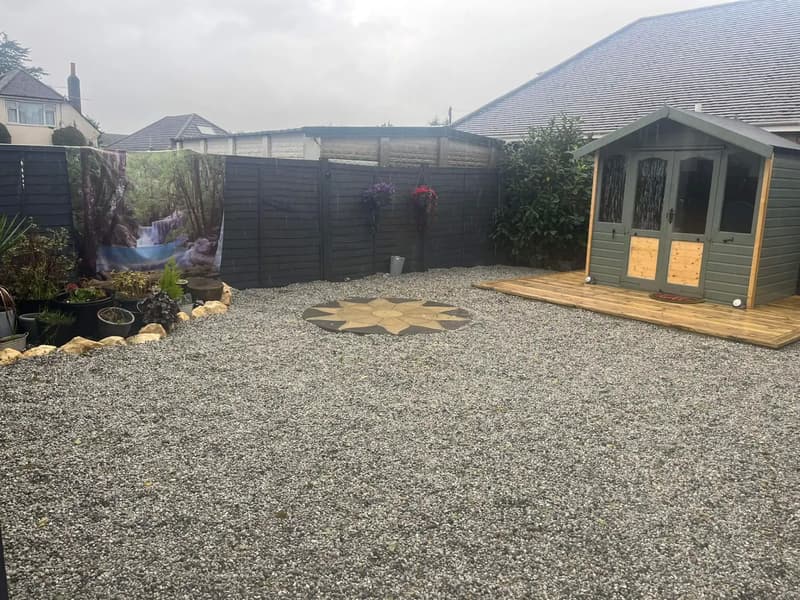
Work out where the water is coming from
Watch the lawn after heavy rain. Does the whole surface stay wet, or just one area? Is water running onto it from a patio, path or neighbouring garden? Does it collect in a dip, or across ground that looks flat? The pattern points to the cause.
A small test hole, dug a spade deep and filled with water, tells you a lot. If the water is still sitting there many hours later, the problem is in the soil itself rather than on the surface.
Cause one: compaction
Years of feet, play and mowing press soil together until water cannot soak through. The top few centimetres become a tight crust and rain simply sits on it. This is very common on family lawns and on routes people cut across.
Mild compaction can be eased by aerating, spiking the lawn so air and water can get in. Severe compaction, especially when the lawn is also worn and mossy, is often better tackled by lifting the old turf, breaking up the ground and relaying on loosened soil.
Cause two: hollows and low spots
Water always finds the lowest point. A lawn that has settled unevenly, or was never levelled properly when laid, will have dips that fill every time it rains. The rest of the lawn may be fine.
Topping up a shallow dip can work. Deeper or larger hollows usually need the turf lifting, the ground regrading so water runs where it should, and the lawn relaying. That is garden levelling work rather than lawn care.
Turfing
- Ground cleared and prepared
- Accurate levelling
- Aftercare guidance included
Cause three: heavy ground
Some gardens simply sit on dense, slow draining soil. Water soaks in eventually but takes a long time, and in a wet winter the ground never gets the chance to dry out.
Improving the soil structure before turfing helps a great deal, as does making sure the finished surface has a gentle fall rather than being dead flat. Where the ground is very poor, bringing in better topsoil gives new grass a healthier layer to root into.
- Aerate for mild surface compaction
- Regrade for dips and hollows
- Improve or replace soil on heavy ground
- Redirect runoff from hard surfaces
Cause four: runoff from elsewhere
A patio, path or driveway that falls towards the lawn sends every drop of rain onto the grass beside it. A garden below a neighbour's can take their water too. The lawn is not the problem; it is catching someone else's water.
The fix is to deal with the water before it reaches the grass, by correcting the fall of a hard surface or giving the water somewhere else to go. Relaying the lawn without doing that will only give you a new wet lawn.
Why autumn and winter are the time to plan
The wettest months are when the problem is most obvious, so they are the best time to see exactly where water sits. Groundwork such as regrading and preparation can be carried out over the colder months, with turf laid as conditions allow, so the lawn is ready to use by spring.
If your lawn never seems to dry out and you would like someone to look at why, call Ashley on 07904 481178.