Signs your garden needs levelling
Some gardens make it obvious: a steep bank you cannot mow, a lawn that falls towards the back door, a patio that has sunk at one corner. Others are subtler. Water that sits in the same place every winter, a table that never stands flat or a lawn that scalps on the high spots all point to uneven ground underneath.
Relevelling is the same job on a garden that was once level but has settled, often where soil was backfilled after building work and never properly compacted.
The survey
The job starts by working out where the ground is now and where it needs to be. Heights are taken across the garden, including at the house, boundaries and any doors. The finished level has to sit safely below the damp course, meet paths and gates sensibly, and give rain somewhere to go.
This is also when the options are discussed. A gentle slope can often be evened out on its own. A steeper one might be better split into two flat areas with a step or retaining edge between them.
Cutting, filling and moving soil
Where the ground is too high it is dug down; where it is too low it is built up. Often the soil taken from one end can be reused at the other, which reduces waste. Anything surplus, along with old turf, rubble and roots, is taken away.
Built up ground is compacted in layers rather than tipped and raked. Loose fill will settle over the following months, taking whatever sits on it down too.
Garden levelling
- Accurate level planning
- Ground moved and compacted
- Ready for turf, patios or redesign
Holding ground back
Where one level meets another, the higher soil needs holding back. Depending on the height and the look you want, that might be sleepers, a low wall or a planted bank. The taller the change in level, the more the retaining edge has to be designed rather than simply placed.
Drainage while the ground is open
Levelling is the best moment to fix a wet garden, because the ground is already opened up. Falls can be set so water runs away from the house, and where the soil holds water a soakaway or drain can be put in before anything is finished on top.
- Finished levels below the house damp course.
- A deliberate fall away from buildings.
- Drainage added where water has always collected.
- Compacted ground ready for turf, slabs or decking.
What comes next
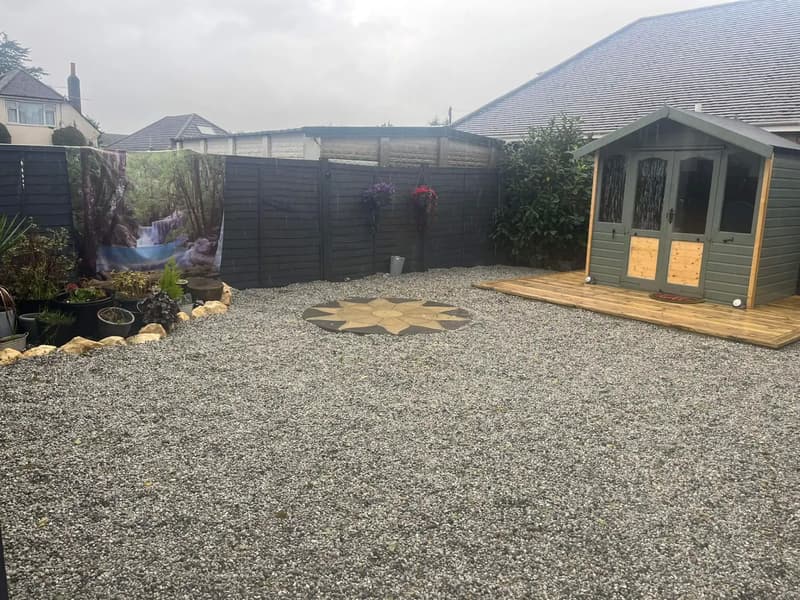
A levelled garden is a blank canvas. Turf, a patio, slabbing, decking or a mix of all four can follow straight on, and planning them together means each surface meets the next neatly. Levelling is also well suited to autumn and winter, so the garden is ready for finishing in spring.
AJ Adams Landscaping levels and relevels gardens across Southampton and within 20 miles. Call Ashley on 07904 481178 to have your garden looked at.