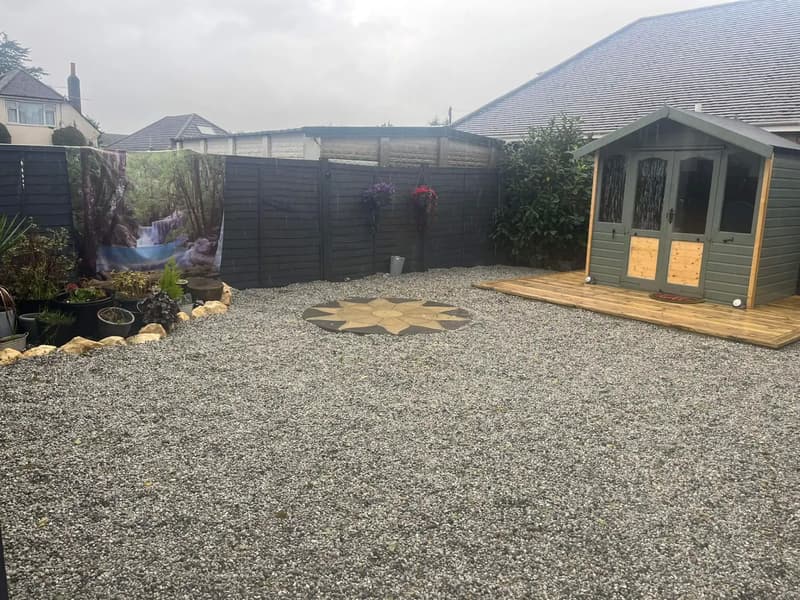
Day one: setting out and supports
The shape of the deck is marked out and the finished height agreed. That height matters: a deck too close to a door threshold can bridge the damp course, and a deck set too high may need steps and edge protection you had not planned for.
Then the supports go in. On firm ground that might be solid pads; on softer or sloping ground, deeper footings. Weeds are dealt with and a membrane laid so nothing grows up through the gaps later. On a level, easy site this can all be done in a day.
The subframe
Bearers and joists are fixed on the supports and checked for level. This is the skeleton of the deck and the part that decides whether it feels solid underfoot for years. Joist spacing suits the boards being used, and the whole frame is kept off the soil so air can move underneath.
On a raised deck this stage takes the longest, because posts are taller, bracing is needed and everything has to be square across a bigger drop.
Boards, steps and trims
Boards are laid with even gaps so rain drains through and the timber or composite can move with the seasons. They are fixed, cut neatly at the ends and finished with a fascia around the edge so the frame is hidden.
Steps, balustrade and any built in seating come last. These are small in area but fiddly, and on a raised deck they can take as long as the boards themselves.
Decking
- Timber and composite choices
- Strong subframe construction
- Steps and edges finished neatly
What makes decking take longer
- Height: raised decks need taller posts, bracing and edge protection.
- Slope: the more the ground falls away, the more work goes into the supports.
- Soft or wet ground: deeper footings take more time.
- Access: materials carried through a house take longer to bring in.
- Extras: steps, balustrade, lighting and seating all add time.
- Old surfaces: lifting an existing patio or deck first adds a stage.
Timber or composite: does it change the timescale?
Not much. Composite boards often use hidden fixings, which can take a little longer to lay, while timber may need end cuts treating. The bigger difference is after the build: composite needs little more than a wash, while timber wants an oil or stain every year or two.
When to book
Decks can be built through autumn and winter in most weather, which means a deck booked in the colder months is ready to use as soon as spring arrives. AJ Adams Landscaping builds garden decking across Southampton and within 20 miles. Call Ashley on 07904 481178 to talk about yours.