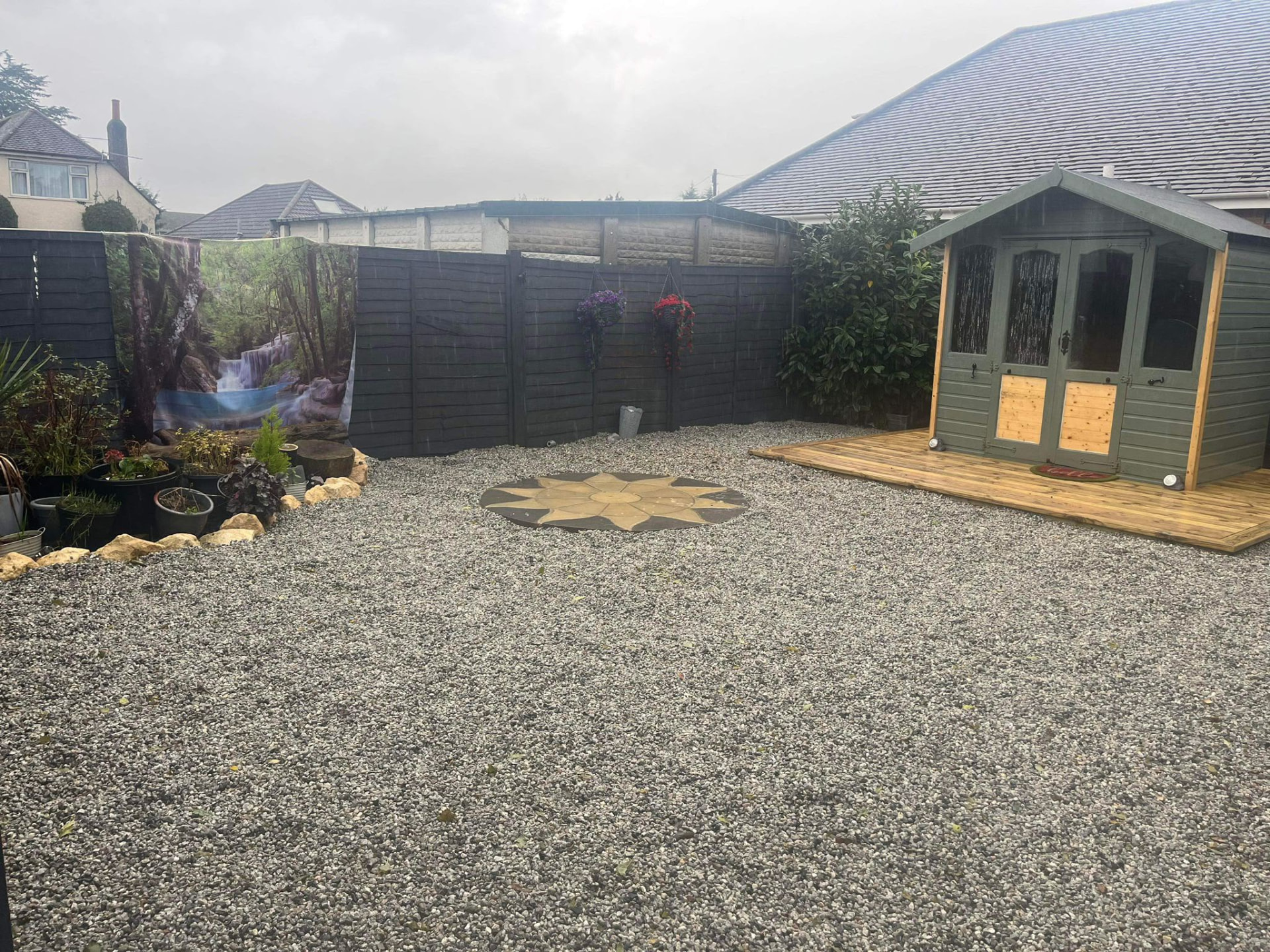
Start with the level of the house
If the ground beside your back door sits close to your floor level, decking steps out cleanly with no step down and no awkward threshold detail. If the ground is well below the door, paving with a step usually reads better and costs less.
Fighting that relationship is where most disappointing garden surfaces come from.
Cost over ten years
A patio costs more or less nothing to keep beyond an occasional wash and repointing after many years. Softwood decking needs oiling every year or two. Composite needs almost nothing but costs the most to install.
Over a decade, a sandstone patio and a composite deck end up in similar territory. Softwood is cheapest at the start and the most demanding of your time.
Wet ground and slopes
On heavy clay that holds water, decking is often the better answer, because it lifts you above the wet rather than sitting in it. On a slope, a deck can span the fall without the digout, retaining and spoil removal a level patio would need.
On dry, level ground next to an older house, paving usually wins on looks and longevity.
The practical differences people forget
Timber in deep shade needs grooved boards or it gets slippery in winter. Paving takes a barbecue, a hot tub and heavy planters without a thought. Decking is warmer underfoot in bare feet and quieter to walk on.
- Choose paving for weight, shade and a period property
- Choose decking for a level threshold, a slope or wet clay
- Choose composite if annual maintenance is the deciding factor
Side by side
Both options are quoted after a site visit, because the ground under them decides most of the price.