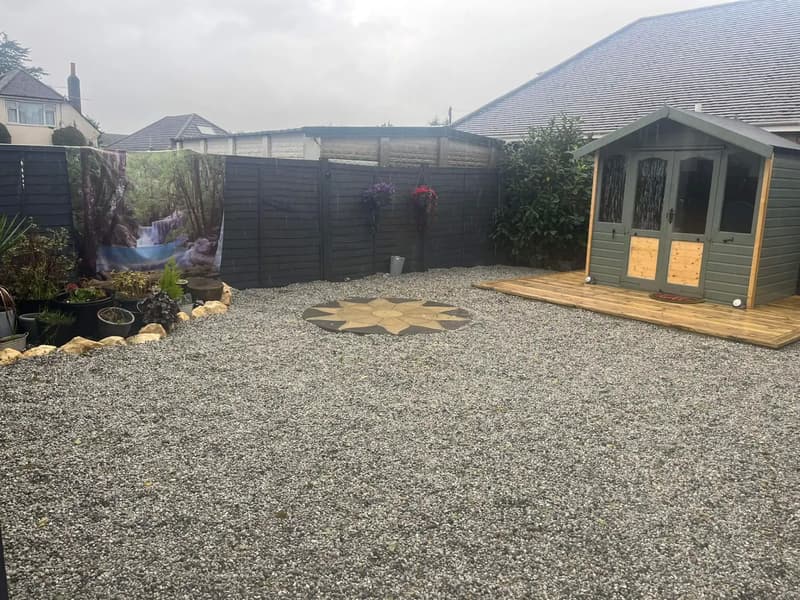
Fence cost per metre and per bay
Fencing is priced per bay because each one is a single unit of work: a post set in concrete, a panel or a run of boards, and a gravel board at the base. The cost of a run depends on the number of bays, the fence type and the ground. Short runs and awkward corners cost more per bay, because the setting out and travel are shared across fewer panels.
Closeboard fence cost
Close board is built in place: posts, rails and then individual feather edge boards nailed on overlapping. It costs more than a panel fence because it takes longer to build, but it is stronger, copes far better with wind, and a single damaged board can be replaced without taking out a whole section. On long or exposed boundaries it is usually the better value over its lifetime.
Concrete fence posts cost
Concrete posts add £25 to £40 each on our figures. They do not rot at ground level, which is where timber posts fail, and panels slide into slotted concrete posts so they can be swapped later without disturbing the post. We recommend them on windy, open and coastal boundaries, where a fence takes the most strain.
Fencing
- Secure posts and solid installation
- Old fencing removed where agreed
- Styles to suit traditional and modern gardens
What else goes into a fencing quote
A few things change the figure beyond the bay count:
- Removing and taking away the old fence and posts
- Old concrete footings that have to be broken out
- Sloping ground, where each bay is stepped
- Gates, which are priced separately
- Access for carrying posts and panels to the back of the garden
When to replace
Winter is a good time to have fencing done. Borders are cut back, so there is less to work around, and a new boundary is in place before plants put on growth in spring. Replacing a full run in one visit also gives a better rate per bay than patching section by section, and the posts line up.