Fewer materials, not more
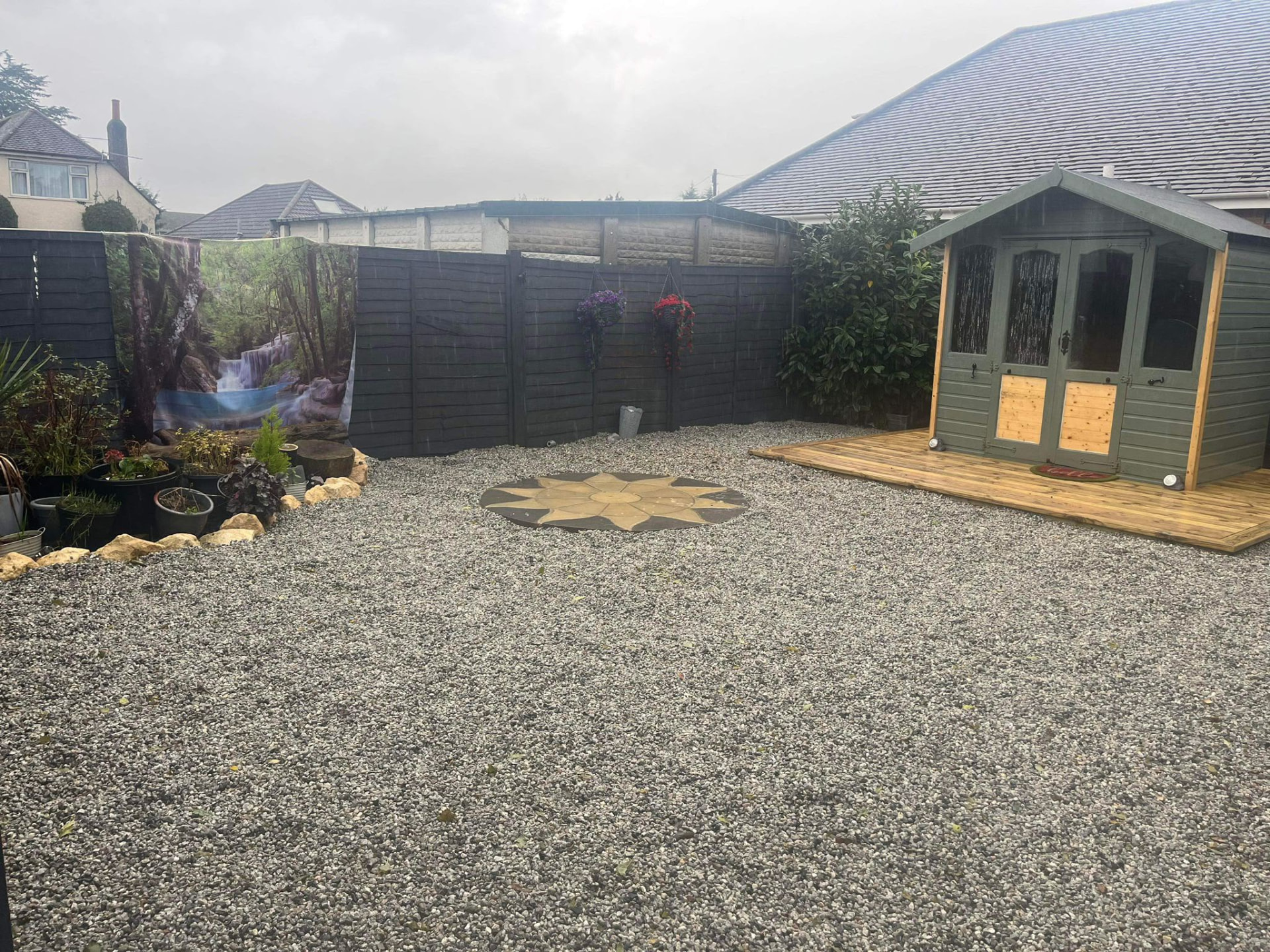
In a garden under 30 square metres, every change of surface cuts the space into smaller pieces visually. One paving across the floor with a single accent, gravel or a feature inlay, reads as one generous room instead of three cramped zones.
Use the walls, not the middle
Raised beds along the boundary put planting at eye level without eating into the usable floor. Trellis and climbers do the same job vertically, softening a high fence or wall without taking a single square metre of standing space.
Should a small garden have a lawn?
Often not. A 20 square metre lawn in the shade of a terraced house rarely thrives, and it needs a mower you then have to store somewhere.
Gravel over a membrane with proper edging, or full paving, gives a surface that is usable in every month of the year and needs a tidy twice a season rather than a cut every week.
Low upkeep, done properly
The reason gravel gardens get a bad name is that people tip stone over old turf. Done properly it means stripping the surface, a quality membrane, real steel or timber edging and the right depth of gravel so it does not shift underfoot.
Done that way it stays clean for years. Done the quick way, grass is back through it by the following summer.
- One paving material, one accent, no more
- Planting raised along the boundaries
- Gravel or paving instead of a struggling lawn
- A single focal point rather than several small ones
Plan for the access you have
In terraced streets across Southampton, Portsmouth and Gosport everything comes in and goes out through the house. That favours materials that arrive in carryable pieces and a design that does not need a digger to build.